


Gwangju’s host bar scene is a specialized part of its nightlife, centered on paid social attention rather than simply ordering drinks. If you’re looking for a host bar in Gwangju, the useful starting point is understanding the format, checking a venue’s current terms, and deciding whether that experience fits your budget and comfort level. This guide explains the terminology, places the experience within wider Gwangju nightlife, and offers practical ways to plan a respectful evening without relying on unverified venue claims. Obtain the Best information about 광주호빠.
What is a host bar in Gwangju?
A host bar generally refers to a drinking establishment where customers pay for an experience that includes the company and conversation of male hosts. Korean reporting has used the term this way, distinguishing it from an ordinary bar where staff primarily take orders and serve drinks. However, that broad definition does not establish what any individual Gwangju business offers, charges, or permits.
That distinction matters before you make a reservation. You might want a sociable evening with attentive staff, while a friend imagines a cocktail lounge with occasional conversation. Those are different expectations, and neither should be left for the bill to explain.
Think of your first task as identifying the actual service. Ask whether you would be booking ordinary seating, a private room, a timed hosting session, or something else. A clear answer should describe what happens and what you pay for, not just promise a great atmosphere.
Host bars and other nightlife venues
For planning purposes, separate the experience you want into a few simple categories. These are questions to clarify with a business, not guarantees about every establishment using a particular label:
| Experience you want | What to establish before entering |
|---|---|
| Drinks and conversation with your own group | Whether ordinary drink prices apply and seating has any minimum spend |
| Paid conversation with a host | How hosting is charged, how long it lasts, and whether drinks are separate |
| Singing with friends | Whether you are booking only a karaoke room or additional services |
| A private celebration | Room charges, group limits, cancellation terms, and the complete payment arrangement |
| Music and a lively shared space | Entry requirements, cover charges, seating rules, and any purchase minimum |
Do not assume that similar photos mean similar services. A sofa, dim lighting, or a microphone tells you very little about the commercial arrangement. Ask what the booking includes in plain language.
It is also worth dropping expectations borrowed from television, social media, or another country. A dramatic clip is entertainment, not a service description. Use it to notice what interests you, then verify the details independently.
Decide whether the format suits you
Try a quick exercise before searching: finish the sentence, “I would enjoy this evening if…” Be specific. Perhaps you want easy conversation, a celebration with friends, or simply a better understanding of an unfamiliar nightlife format.
Then finish a second sentence: “I would leave if…” Your answer might involve unclear prices, pressure to drink, or an atmosphere that feels too private. Setting both expectations in advance gives you a practical way to judge the experience without letting the moment decide everything.
Gwangju nightlife extends beyond host bars
Gwangju offers evening experiences that do not depend on hosted entertainment. The Korea Tourism Organization describes Chungjang-ro as a major shopping district and highlights its Hong Kong Alley as a nighttime attraction with illuminated streets and food businesses. Those are useful starting points for understanding the city after dark, but they are not evidence of a host bar district or a recommendation for any particular venue.
Keeping that distinction clear makes planning easier. You can choose an area for dinner or a walk without assuming every nearby nightlife business provides the same kind of service. It also gives your evening somewhere to go if a proposed booking does not work out.
Chungjang-ro as an evening starting point
If you like beginning with a walk and something to eat, research Chungjang-ro and Hong Kong Alley before choosing your later plans. The official tourism descriptions provide a more grounded introduction than a promotional page claiming access to an entire hidden scene. Check individual businesses separately rather than treating the area’s nighttime appeal as an endorsement of everything nearby.
A useful approach is to pick your meeting point first and leave the specialized venue decision open. That lets everyone arrive, talk through the plan, and confirm that they still want the same evening. Nobody needs to commit to an unfamiliar format just because the group has already traveled across town.
Dongmyeong-dong for a quieter beginning
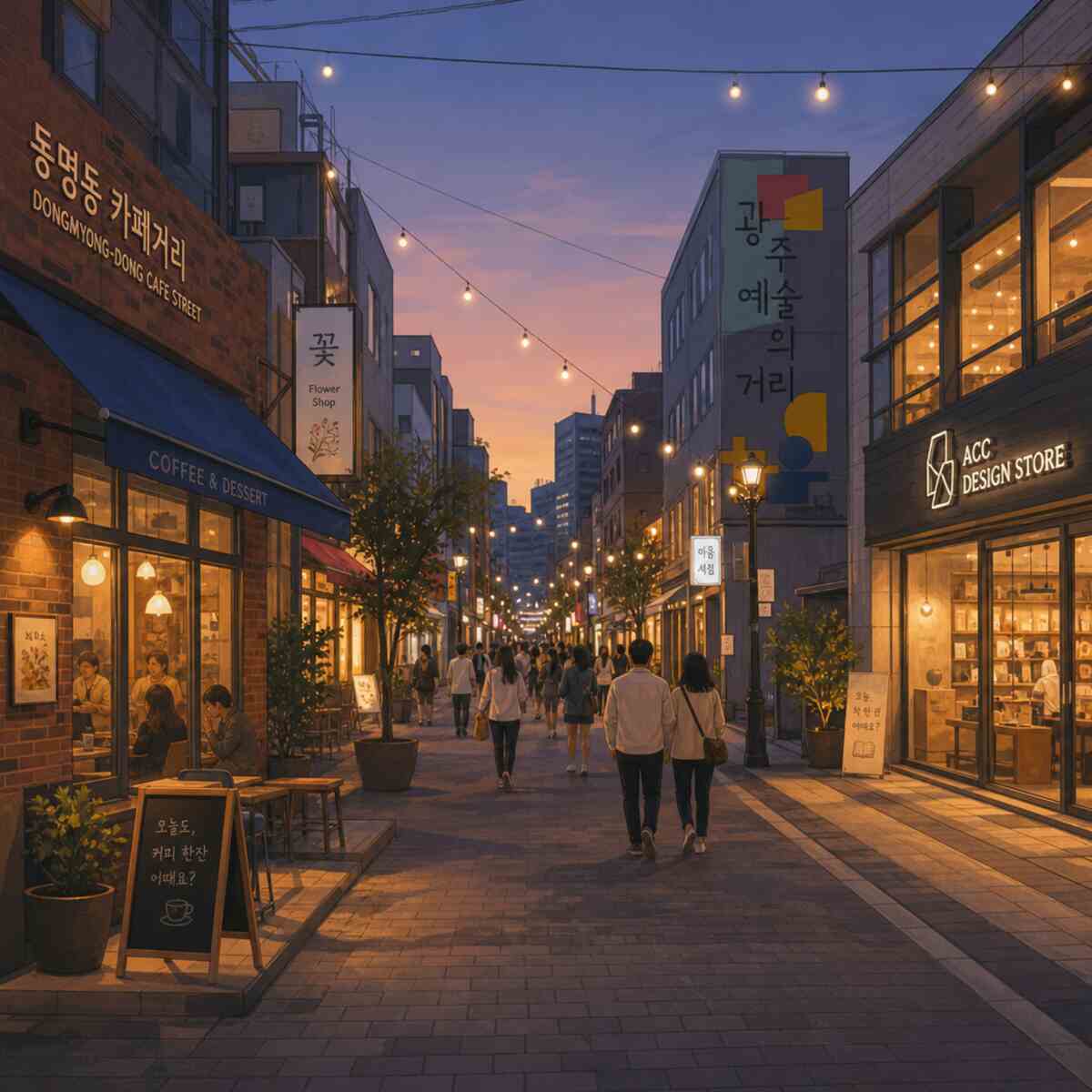
The Korea Tourism Organization also highlights Dongmyeong-dong Café Street, known as Dongnidan-gil, for its cafés, alleys, murals, and relaxed setting. Its broader Gwangju itinerary includes the National Asian Culture Center, which hosts exhibitions and performances. These provide other ways to shape a city visit, subject to the schedules of individual places.
For your own plan, a café can be a comfortable place to compare options while everyone is clearheaded. Review the booking message, agree on spending, and decide how you will get home. A calm beginning leaves room for a lively evening without making the evening depend on one reservation.
How do you find and check a host bar in Gwangju?
Find a possible venue through a current listing or direct business contact, then verify its identity, service, pricing, admission rules, and location before committing. Search results alone are not enough to establish that a venue is operating, suitable for your group, or offering the experience you expect. Treat discovery and verification as two separate tasks.
Typing “host bar Gwangju” into a search engine can start the process, but the useful work comes afterward. Your goal is not to collect the longest list. It is to identify one option you can understand well enough to accept or reject.
Confirm the business identity
Start with a consistent business name and a complete address. Ask whether the contact person represents the venue directly or is arranging a booking elsewhere. If the proposed destination changes during the conversation, pause and check the new place rather than treating it as an automatic substitute.
Save the address in the form supplied by the business, along with the reservation message. Do not rely only on a picture of an entrance or an instruction to meet someone nearby. Your group should know where it is going before leaving its current location.
Use this first-pass checklist:
- Business identity: Can you match the name, address, and contact details across the information provided?
- Service description: Can someone explain what customers actually book and receive?
- Current availability: Has the business confirmed your intended date and arrival time?
- Admission: Has it confirmed that your group meets its entry requirements?
- Written terms: Can you keep a readable record of the quoted arrangement?
- Independent departure: Do you know how you would leave without relying on the person arranging entry?
An unanswered question does not prove wrongdoing. It does mean you do not yet have enough information to make a comfortable decision. Keep that distinction in mind and avoid turning uncertainty into either an accusation or blind trust.
Read reviews for useful detail
When evaluating reviews, focus on the parts you could verify or act on. A description of how a charge was explained is more useful than a string of compliments. Likewise, a complaint is easier to assess when it identifies the booking arrangement and the specific disagreement.
Ask yourself whether the reviewer describes the same business and service you are considering. Check the date, look for consistent details, and separate firsthand descriptions from repeated promotional language. You are looking for a clearer picture, not a perfect average score.
Avoid using photographs as a shortcut for quality. An attractive room does not answer questions about language support, billing, or the treatment of boundaries. Keep those questions on your list even if the pictures look impressive.
Send a short booking inquiry
A simple message is often easier to understand than a long explanation of your travel plans. Put the questions that affect your decision first. Leave small preferences, such as seating position, until the basic arrangement is clear.
For example:
Hello. We are considering a visit for our group. Please confirm the service offered, entry requirements, booking length, and full pricing structure. Are hosting, seating, drinks, and any additional charges included or separate? Can we review these details in writing before booking?
Add your group size and intended date when you use the message. Ask about the language you need rather than assuming someone can provide it. If the answer remains vague after one clear follow-up, consider another option instead of entering a long negotiation.
Understand the full cost before you sit down
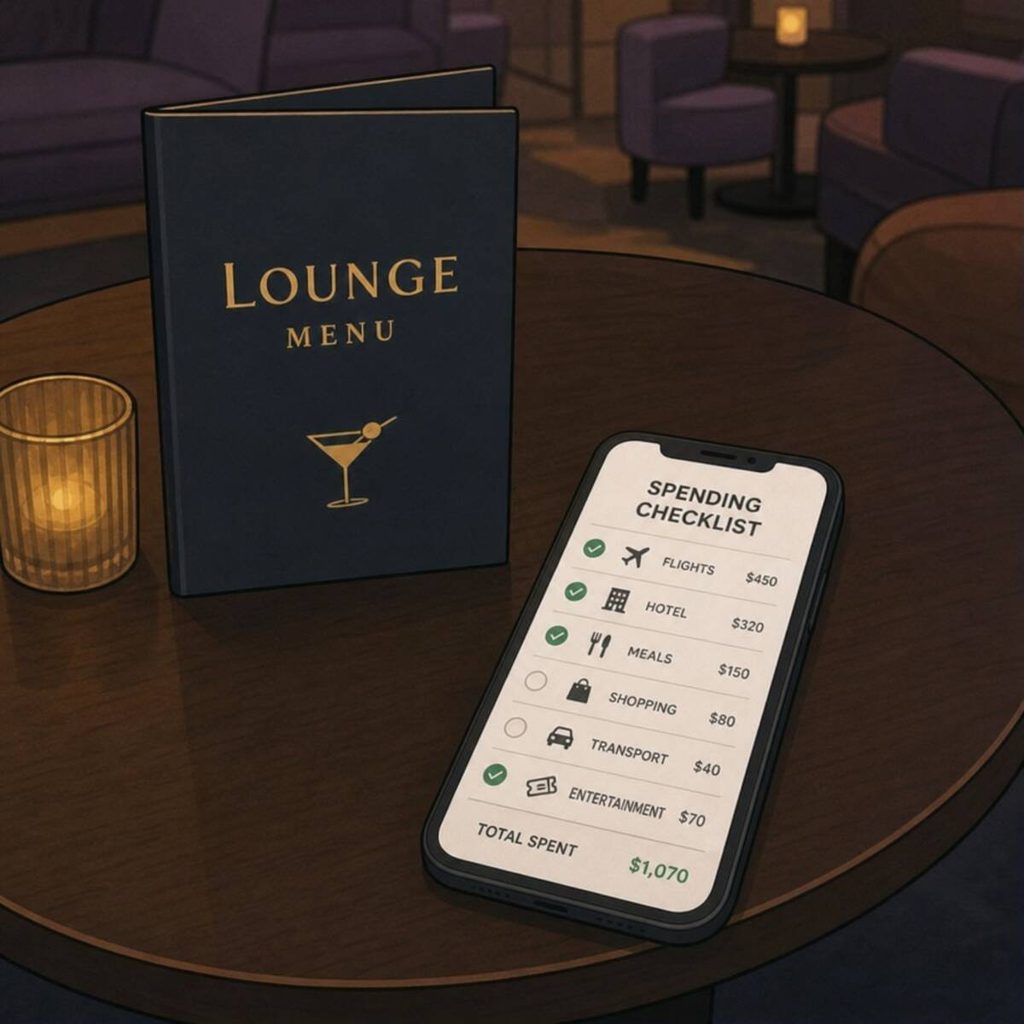
For your own budget, treat every possible component as a question until the business confirms whether it applies. Do not assume that a quoted drink price covers seating, hosting, room use, or the length of your visit. Equally, do not assume a charge exists just because another venue uses it.
The key is to turn a verbal promise into an understandable total. You should be able to explain the arrangement to a friend without adding “I think” to every sentence. If you cannot, ask for clarification before agreeing.
Separate the possible charges
Use the following list as a worksheet. Mark each item “included,” “separate,” or “not applicable,” based on the venue’s written response:
- Entry or seating: Any amount required simply to enter or occupy your place.
- Room use: Any charge associated with a private space, including how the period is measured.
- Hosting: Whether paid social time is included, optional, or separately calculated.
- Drinks and food: What is included, what must be ordered, and how additional items are priced.
- Staff drinks: Whether you may be asked to purchase these and whether each requires approval.
- Extensions: What happens when the agreed period ends and who authorizes more time.
- Service charges and taxes: Whether the quoted total includes every applicable addition.
- Deposit: How it is credited and what happens if your plans change.
- Payment: Which methods are accepted and when payment is due.
This is not a claim that every host bar has these charges. It is a way to prevent an incomplete quote from becoming your working budget. Delete the items that do not apply once you have a clear answer.
Ask for a complete example
Instead of asking only, “How much is it?” describe a bounded visit. State your group size, the booking length you want, and the items you intend to order. Then ask for the complete amount for that arrangement and an explanation of anything that could increase it.
For example, you might write: “Please quote our visit with the stated seating, hosting time, and selected drinks. We do not authorize extra orders or additional time without asking us first.” That is a sample request, not a guarantee that a venue will accept those terms.
Also clarify whether the quote applies to each person or the whole group. Ask whether everyone must participate in the same package. A group total and a per-person figure can sound similar in a rushed conversation but lead to very different decisions.
Agree on group spending rules
Before arrival, choose who can approve shared orders. Decide whether individual purchases stay individual and how you will handle someone who wants to leave early. Have this conversation privately, without making anyone defend their income or comfort level.
A straightforward group agreement could be:
We will split only the items we all approve. Individual extras belong to the person who orders them. Any extension requires everyone’s agreement, and anyone can leave without pressure.
Set aside your transport money before assigning the rest of your budget. Then choose a spending limit you can comfortably keep, not one based on how much you hope the evening will be worth. You do not need to announce that limit to anyone beyond the people sharing your costs.
Make the end time clear
Ask how you will know the booked period is nearly finished. If you do not want an extension, say so before the session begins and repeat it when necessary. Avoid treating silence as a spending instruction.
A useful sentence is, “Please tell us before our agreed time ends; we do not want automatic additional time.” Keep your own reminder as well. That gives you a chance to finish the conversation, check the bill, and leave without rushing.
Plan the visit in a simple sequence
A good plan should reduce decisions, not fill the night with rules. Once you have verified the business and understood the price, keep the rest straightforward. Arrive together if possible, confirm the terms, and give yourself permission to reassess.
The following sequence is a suggested planning method. Adjust it to your group, but keep the points where you can pause or leave. Those decision points are more useful than a rigid hour-by-hour schedule.
Before leaving your accommodation
Save the venue address, booking confirmation, and return destination somewhere easy to open. Charge your phone and decide how your group will stay in touch if separated. If someone outside the group is your check-in contact, send them only the details they need.
Choose practical clothing and ask the venue directly about any dress requirement. Do not buy something new because an anonymous guide claims there is a universal look. Your aim is to meet the actual entry rules and remain comfortable getting there and back.
Give everyone a final chance to opt out. A person who enjoyed researching the idea may not want to attend, and that is fine. Arrange an alternative without turning it into a debate at the door.
At the entrance
Confirm that the business matches your booking and that the quoted arrangement still applies. Ask to review the relevant menu or written terms before ordering. If anything significant has changed, stop and decide whether the new offer still suits you.
This is also the moment to clarify communication. If the person who handled the booking is absent, establish who can explain charges and help with questions. Do not start an experience you cannot meaningfully understand just because you have already arrived.
During the visit
Begin with what you agreed to rather than adding extras immediately. Keep shared spending visible to the group and ask about any unfamiliar item before accepting it. There is no need to interrupt every conversation, but there should be a clear way to approve purchases.
Check in with yourself as well as your friends. Are you enjoying the format? Is the noise comfortable? Do you still want to stay? A visit does not need to become unpleasant before you are allowed to finish it.
Before leaving
Ask for an itemized bill and compare it with your agreed purchases. Give yourself time to understand an unfamiliar line rather than guessing. Keep the receipt and booking record together afterward.
Then move on to your return plan. Avoid adding another stop simply because the evening feels unfinished to someone else. A pleasant, bounded visit is a complete evening, not a failed attempt at a longer one.
Language and communication without assumptions
Ask directly whether the venue can explain its services and charges in a language you understand. You do not need fluent conversation about every subject, but you do need a reliable way to discuss money, time, boundaries, and leaving. If those basics remain unclear, choose a simpler experience.
Prepare a few short English messages that you can show or translate as needed. Keep one idea per sentence. Avoid jokes, slang, and complicated conditional wording when the meaning affects your booking.
Useful messages include:
- “Please show me the total price before we order.”
- “Is this included in our booking?”
- “We do not want any additional drinks.”
- “Please ask before adding more time.”
- “I do not want physical contact.”
- “We would like the itemized bill now.”
- “We are ready to leave.”
After using a translation tool for an important point, ask the other person to confirm the amount or choice explicitly. Pointing to the relevant price and receiving a clear response is more useful than exchanging several polite but uncertain messages.
Conversation itself can stay easy. Ask about music, food, hobbies, or public places the person enjoys discussing. Let the other person decide how much personal information to share, and do not treat paid attention as permission to ask intrusive questions.
You can also tell a host what kind of conversation you prefer. “We would enjoy a relaxed chat” is clearer than hoping they infer your mood. If you prefer less attention, say that too; there is no need to perform enthusiasm to be polite.
Consent, privacy, and respectful conduct
Treat consent as specific, voluntary, and open to change. Paying for a service does not give anyone control over another person’s body, private life, photographs, or continued attention outside the agreed arrangement. Apply that standard to yourself, your friends, staff, and other guests.
Ask before taking a photograph or recording a conversation. If someone declines, put the camera away without bargaining. When sharing your own experience afterward, focus on the service and your decisions rather than exposing people who did not agree to appear.
Keep boundaries easy to state
You do not need a long explanation to decline a drink, a conversation topic, or physical contact. “No, thank you” is a complete response. If a gentler version feels easier, try, “I’m comfortable with conversation only.”
Respect the same clarity from staff. Do not repeatedly ask for private contact details or make personal access a test of friendliness. Professional warmth can be enjoyable without needing to become a relationship beyond the venue.
For groups, make consent visible in small decisions too. Ask before ordering for someone, volunteering them for an activity, or extending a shared booking. A friend’s silence should not become permission to spend their money or decide their night.
Leave room for different comfort levels
People can react differently to the same setting. One person may enjoy focused conversation while another finds it tiring. Neither reaction needs correcting.
Agree on a simple check-in phrase before you go, such as “Shall we review the plan?” Use it as an invitation to pause, not a signal that someone has spoiled the evening. If a friend wants to leave, help them leave safely rather than asking them to stay for the group’s convenience.
Local laws and age requirements
Follow South Korean law rather than assumptions from home or claims made in promotional messages. The Youth Protection Act defines protected youth as people under 19, with an exception beginning January 1 of the year they turn 19. Because eligibility and a business’s admission policy are separate questions, confirm the applicable requirements and accepted identification before visiting; never assume entry is available to everyone who can legally purchase alcohol.
A nightlife label is not proof that every advertised activity is lawful. Do not use an old article, an anonymous recommendation, or a salesperson’s reassurance as legal advice. If a proposed service raises legal concerns, decline it and seek current guidance from an appropriate official source.
South Korea has strict drug laws, and foreign visitors remain subject to local criminal penalties. Do not accept an unfamiliar substance or assume something permitted at home is permitted during your trip. The U.S. Department of State also warns that some prescription medicines require advance authorization, which is a separate issue to resolve before travel.
Keep the transport decision simple: do not drive after drinking. Arrange a sober return rather than trying to calculate whether you might be below a legal threshold. Official travel guidance warns of serious penalties for drink-driving in South Korea.
Safety and handling problems calmly
Plan with the same care you would use in any unfamiliar nightlife setting. Official UK travel advice notes incidents around bars and nightlife areas and recommends care when traveling alone at night, along with legitimate taxis or public transport. That advice supports preparation, not an assumption that a particular Gwangju business is unsafe.
Keep your own decisions manageable: know what you have ordered, keep your belongings close, and avoid continuing a visit once you feel unable to follow the conversation or bill. If you are with friends, check on each other without turning the evening into supervision.
Use clear reasons to pause or leave
Decide in advance which situations you will not negotiate through. Possible reasons include a destination change you cannot verify, a refusal to explain costs, repeated disregard for a stated boundary, or pressure to purchase something you have declined. These are personal decision rules, not a legal classification of the business.
If a situation feels wrong, you do not need to prove that it is dangerous before leaving. Move toward a public place and reconnect with your group or trusted contact. Avoid staying solely to recover the value of a deposit or to keep an acquaintance happy.
Address a billing disagreement with records
Start with the specific item you do not understand. Ask what it represents, when it was ordered, and how it relates to the written quote. Keep your explanation short and show the relevant message rather than arguing about the whole evening at once.
For example: “Our booking says this amount includes the agreed time. Please explain this additional time charge.” If the issue is an unfamiliar purchase, ask who authorized it and request an itemized explanation. Avoid threats, insults, or signing a statement you cannot read.
Keep your booking messages, receipts, and your own notes. If you later contact your card issuer, describe the events accurately and ask about its process without assuming reimbursement is guaranteed. Do not post identifying images of staff as a way to pressure a business.
Save the right assistance numbers
For police assistance in South Korea, call 112. For fire or ambulance emergencies, call 119. The Korea Tourism Organization also provides travel information and interpretation assistance through 1330, which should not replace emergency services when someone is in immediate danger.
Save the venue’s complete address with these numbers before going out. If you need help, explain your location and the immediate problem first. For a non-emergency communication problem, ask what assistance is available rather than assuming a travel adviser can determine a business’s legality or settle a payment dispute.
A flexible evening without a host bar booking
You can be curious about hosted entertainment and still decide against booking it. There is no obligation to try a format simply because you researched it. Keep a second plan that offers the part you actually wanted: conversation, music, food, or time with friends.
For a city-focused alternative, use the official descriptions of Chungjang-ro, Hong Kong Alley, and Dongmyeong-dong Café Street to build a short list of places to investigate. Check current opening details for each stop rather than assuming an entire district operates late. These areas provide documented shopping, food, café, and evening-street options without establishing anything about host bar availability.
Try one of these simple evening structures:
- Conversation first: Dinner, a relaxed drink or café stop, and a clear finish time.
- City exploration first: A cultural visit when open, an evening walk, and somewhere to sit afterward.
- Celebration first: A meal everyone agrees on, followed by one prechecked activity with a shared spending limit.
- Low-commitment first: Meet somewhere public, compare everyone’s energy level, and decide the next stop together.
Keep the alternative appealing in its own right. It should not feel like a punishment for the person who chose not to visit a host bar. A good group plan gives everyone a reasonable way to participate without having to accept the most specialized option.
A final checklist before you go
Use this checklist once, before leaving, rather than repeatedly searching for reassurance. If several important answers are missing, delay the booking. More browsing is not always the solution; sometimes the useful next step is a direct question or a different plan.
- You understand the service and want that specific experience.
- The business has confirmed its name, location, and availability.
- Your group meets the stated admission and identification requirements.
- You have a written explanation of the full pricing arrangement.
- You know what requires additional approval and when the visit ends.
- Shared purchases and individual extras have clear rules.
- Everyone can decline drinks, attention, photographs, or more time.
- You have saved the booking, address, and return destination.
- Your transport budget is separate from your entertainment spending.
- You have an alternative that the group would genuinely enjoy.
Take a moment to ask one last question of yourself: would this plan still feel comfortable without the excitement of trying somewhere new? If the answer is yes, you have a useful starting point. If it is no, simplify the evening until the answer changes.
The takeaway
Exploring Gwangju’s nightlife does not require knowing every venue or committing to an unfamiliar experience. For a host bar visit, focus on the essentials: understand the service, verify the business, agree on the complete cost, and keep consent and departure straightforward.
Choose the evening that fits your interests rather than the one a search result makes sound essential. Clear expectations leave more room for enjoyable conversation—and make it easier to change plans when another option suits you better.
