


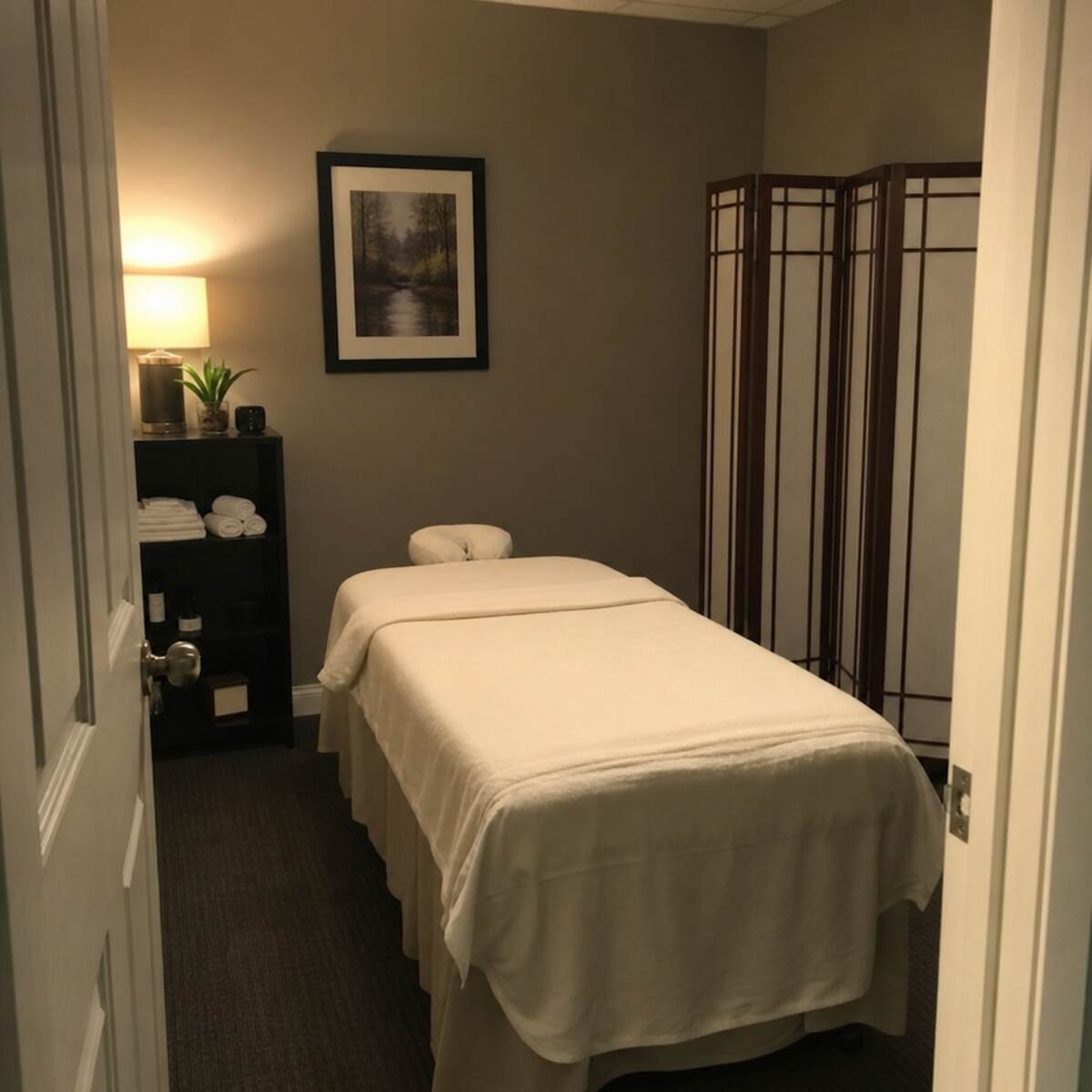
Choosing women-only massage therapists in Busan can make sense if having a female practitioner or visiting a women-only space is important to your comfort. The key is to confirm exactly what a business offers: a female therapist, a service reserved for women, and an entirely women-only facility are different arrangements. This article explains those differences, the practical reasons for choosing this setting, and how to check privacy, treatment details, and booking terms before you commit. Browse the Best info about 부산토닥이.
What does women-only massage mean in Busan?
For your booking, “women-only massage” should mean the specific arrangement the provider confirms, not whatever the phrase seems to suggest. You might want a woman to perform your massage, a treatment area used only by women, or a business that accepts only women clients. State each requirement separately so the receptionist can give you a clear answer.
Think of therapist gender, client eligibility, and facility access as three separate details. A booking that meets one preference might not meet the others. For example, requesting a female therapist does not, by itself, tell you who can use the reception area or changing facilities.
| Your preference | What to ask before booking |
|---|---|
| A female practitioner | “Can you confirm that a female therapist will perform my entire session?” |
| Women clients only | “Is this treatment or business reserved for women clients?” |
| A women-only treatment area | “Can men enter the treatment area while I am there?” |
| Private changing | “Will I have a private place to change, separate from communal facilities?” |
| No shared treatment room | “Is the massage in a room used only by me during the appointment?” |
| A fully women-only visit | “Are reception, changing, treatment, and relaxation areas all women-only?” |
These questions are not interchangeable. If you need several conditions met, put them together in one message and ask the provider to confirm each point.
Also separate the treatment from the building around it. A room can be private even when the business welcomes different genders. Conversely, a women-only area may still involve sharing space with other women.
If a provider uses wording such as “female service,” ask what that means in ordinary language. Does it describe the therapist, the customer, or the treatment area? A short clarification now is much easier than trying to resolve a misunderstanding after arrival.
Why choose female massage therapists?
Choose a female massage therapist when that preference helps you feel comfortable receiving the service, discussing boundaries, or following your personal or religious requirements. It is a valid booking preference, but it is not a substitute for checking the practitioner’s training, communication, and approach. Use gender as one selection criterion rather than treating it as proof of quality.
Personal comfort and modesty
You do not need a complicated reason for preferring a woman practitioner. “I am more comfortable with a female therapist” is enough information for a booking request. You can keep the explanation brief and focus on what you need the business to arrange.
Make the request specific rather than apologetic. For example: “A female therapist is essential for my appointment. Please tell me before confirming if that cannot be guaranteed.” This gives the provider a clear condition to accept or decline.
Modesty preferences deserve the same clarity. You might want to keep particular clothing on, avoid certain body areas, or change without anyone else present. Describe the practical arrangement you need instead of assuming a women-only label covers it.
Less uncertainty before the appointment
If therapist gender is a concern for you, confirming it in advance removes that particular unanswered question. You can then spend your attention on the treatment itself: what will happen, how much pressure you want, and how you will communicate adjustments.
Try writing down your three biggest booking concerns. They might be “female therapist,” “private room,” and “no oil.” Send those first, rather than beginning with a long list of minor preferences that could hide your essential requirements.
This approach also makes comparisons easier. Instead of choosing the listing with the most soothing description, choose from providers that have actually answered the questions that matter to you.
Space for personal boundaries
You may prefer to discuss touch, clothing, or body areas with another woman. You do not have to share personal history to explain that preference. Ask for the arrangement you need and decide how much additional information you want to provide.
The American Massage Therapy Association’s guidance on safe touch emphasizes explaining session details, listening to clients, and protecting their ability to make choices throughout treatment. These are useful professional benchmarks to look for, regardless of a therapist’s gender. They are not a claim about any particular Busan provider.
A helpful booking response should address your request directly. If the answer leaves you unsure, ask a follow-up or choose another option. You do not need to persuade yourself to accept an arrangement that misses an essential condition.
Privacy involves more than therapist gender
Evaluate privacy as a series of arrangements, not a single promise. Ask where you will change, where the massage happens, what covers your body, and who can enter. That gives you something concrete to assess before paying.
For reference, the Association of Massage Therapists’ professional draping standard calls for explaining covering procedures, exposing only the area being worked on, adapting treatment when clients wish to remain clothed, and allowing private dressing. This is an Australian professional standard, not a statement of South Korean law or a guarantee about local businesses.
Room layout and access
Ask whether “private room” means an enclosed room, a curtained treatment space, or a room shared only with your companion. Request clarification if photographs do not show the entrance or separation between treatment areas. Decide which arrangement you are comfortable accepting.
You can also ask whether staff knock and wait before entering. If you need a female-only environment throughout the appointment, include staff access in that discussion. Confirming the practitioner alone does not answer who else may enter.
Clothing and body coverage
Ask what you would be expected to wear for the exact service you are considering. Then state what you want to keep on and ask whether the treatment can work within that limit. If the answer is no, look for a different service rather than assuming you must change your boundary.
Use plain language: “I want to keep my underwear on,” or “I only want treatment over clothing.” Ask how towels or sheets will be arranged and whether you will need to change position. There is no need to wait until you are on the table to learn these details.
Reception and shared facilities
Consider the whole visit if avoiding mixed-gender spaces matters to you. Ask about reception, corridors, lockers, restrooms, and any relaxation lounge included with the booking. You may find that a private treatment room meets your needs even if the wider premises do not.
If it does not, say so before booking. “I need an entirely women-only visit, including changing and waiting areas” is much clearer than “Is it private?” The more concrete your request, the less room there is for different interpretations.
Separate Busan spa visits from massage appointments
A spa visit and a massage appointment are not the same booking decision. Decide whether you primarily want hands-on treatment, bathing facilities, or a combination. Then check the inclusions and access rules for that exact experience.
The Korea Tourism Organization describes jjimjilbang visits as involving gender-separated locker rooms alongside shared areas used by different genders. That distinction matters if your aim is to avoid mixed-gender spaces throughout your visit. Do not assume that a women’s changing area makes the entire facility women-only.
Large spa facilities
Spa Land at Shinsegae Centum City is one established Busan spa option; Shinsegae’s official information describes its hot-spring facilities and visitor arrangements. Its existence as a spa does not establish that it offers your preferred therapist assignment or a fully women-only experience. Check those requirements directly before planning your visit around it.
Hurshimchung in Dongnae-gu is another established hot-spring facility listed by the Korea Tourism Organization. Treat it as a bathing and spa option to investigate, not as a verified women-only massage recommendation. Confirm any hands-on service, practitioner preference, and treatment setting separately.
These examples are starting points for understanding the difference between a large spa destination and a specific massage booking. Neither should be selected solely because it appears in a search for women-only massage. Your confirmed appointment details matter more than the category attached to the venue.
Individual treatment appointments
When contacting a massage studio or spa treatment desk, start with your desired service rather than asking only about admission. Request the treatment name, hands-on duration, therapist arrangement, room type, and total cost. Ask whether access to any wider facilities is optional or required.
If you want only a massage, say that. You should not need to infer whether bathing, changing in a communal room, or using other amenities forms part of the process. Have the provider describe the visit from arrival to departure.
Scrubs, baths, and massage
Do not use “spa treatment” as a shortcut for the experience you want. Ask the provider to describe the actual procedure: whether it involves hands-on massage, skin exfoliation, bathing, stretching, or a combination. Then decide whether that procedure matches your expectations.
If a package contains something you do not want, ask whether it can be removed. Confirm whether removing it changes the duration or price. This avoids paying for a package whose main appeal exists only in its name.
Choose the treatment before choosing the package
Start with a simple goal you can explain without medical language. Perhaps you want quiet time, gentle pressure, attention to your shoulders, or a short appointment that fits your afternoon. Use that goal to narrow the options before considering extras.
Massage includes a range of techniques, and evidence for particular health benefits varies by condition. The National Center for Complementary and Integrative Health notes limitations in the research, including weak evidence for some pain applications. Avoid choosing a package because it promises a cure or guaranteed result.
Set priorities for the session
Choose one main goal and one secondary preference. For example: “I want a gentle session, mainly on my shoulders, and I would prefer quiet.” This is easier to act on than a broad request to fix everything that feels uncomfortable.
If you are unsure about pressure, request a light start and agree on a way to ask for changes. Do not select the strongest-sounding treatment simply because you want good value. Choose the approach you actually want to receive.
Ask about products and techniques
If you would rather avoid oils, scents, heat, or assisted stretching, include that in your first inquiry. Ask whether these elements are optional and what the alternative involves. Do not assume the therapist can remove a central part of a treatment without changing the service.
For any product concern, request the product name or ingredient information before booking. Let the provider know what you need to avoid. If suitability remains uncertain, leave that treatment off your shortlist rather than relying on a vague description such as “natural.”
Compare useful details
Use this short treatment checklist when reviewing a menu:
- Body areas: Which areas are included, and which can be skipped?
- Pressure: Can the practitioner begin gently and adjust during the session?
- Position: Will you lie face down, face up, or in another position?
- Products: Are oils, fragrances, creams, or heated items involved?
- Clothing: What must be removed, and what can remain on?
- Duration: How much of the appointment is actual hands-on treatment?
Keep your answers together in one note. This makes two similar-looking packages much easier to compare without relying on promotional wording.
How do you find women-only massage therapists in Busan?
Find suitable options by searching for your precise requirements, checking each provider’s own service information, and obtaining written confirmation before paying. A search result can help you discover a business, but it should not be treated as confirmation of its current therapist availability or access policy. Your shortlist should contain providers that can answer your essential questions clearly.
Use location and preference together
Start with “women-only massage therapists Busan,” then narrow the search with the neighborhood where you plan to stay or spend time. Also try “female massage therapist” if your main requirement concerns the practitioner rather than the whole facility. Different wording helps you investigate the separate arrangements you might accept.
For each promising result, open the actual service information. Check that the address is in Busan and that the treatment you want appears on the menu. Keep discovery and verification separate: finding a relevant phrase is only the beginning.
Check the provider’s information
Look for a clear business identity, contact method, location, treatment description, and booking terms. If these details are missing, ask for them before sending a deposit. Choose how much uncertainty you are willing to accept, especially when the booking involves travel across the city.
Use photographs to form questions, not conclusions. If a picture shows several tables, ask whether your booking uses that room. If it shows a private room, ask whether that exact room type is included in your chosen service.
Read reviews for specific details
When you read reviews, focus on descriptions rather than praise alone. Look for comments about therapist requests, communication, room arrangements, cleanliness, and how concerns were handled. Note whether a reviewer describes the same treatment you are considering.
Treat review details as leads to verify directly. A reviewer’s account of a female therapist does not confirm who will be available for your appointment. Use it to ask a better question, not to skip confirmation.
Build a small comparison list
Shortlist a few providers rather than collecting every possible option. Record each provider’s response beside your essential criteria. Remove any option that cannot meet a non-negotiable requirement, even if its photographs or package description appeal to you.
Confirm your booking in writing
A useful booking message gives the provider enough detail to check the arrangement without becoming difficult to follow. Lead with what is essential, then ask about the service and payment terms. Keep a copy of the reply so you can refer to the same details at check-in.
A message you can adapt
Hello. I would like to book a massage on [date] at around [time]. A female therapist is essential for my booking. I would also like a private treatment room and private changing arrangements. Please confirm whether these are available, what the treatment includes, the hands-on duration, and the total price. Please also send the cancellation terms and explain what happens if a female therapist becomes unavailable.
If you need the whole facility to be women-only, add that explicitly. If you only need a female practitioner, remove the requirements you do not have. A shorter, accurate message is better than copying conditions that do not matter to you.
Avoid sending several separate messages before the provider has answered. Put the main details in one place, then follow up on anything unresolved. This makes it easier to see whether every essential point has received an answer.
Requests and confirmed arrangements
Ask the provider whether the female therapist assignment is confirmed or merely requested. If it is only a request, decide whether you are willing to proceed on that basis. Do not pay assuming the distinction will resolve itself later.
Discuss the fallback before payment. Would you prefer a different appointment time, cancellation, or another service if the practitioner becomes unavailable? Ask what the provider’s terms allow rather than assuming a refund or free change will be offered.
Details to save
Keep a simple booking record containing:
- The business name and exact location.
- The appointment date and local time.
- The treatment name and hands-on duration.
- Confirmation of your essential therapist and privacy requirements.
- The total amount, deposit, and remaining balance.
- Cancellation, late-arrival, and therapist-change terms.
- The contact method to use if you have trouble finding the entrance.
Before finishing the conversation, read the record once as if someone else had to attend on your behalf. Any missing detail that would confuse them is worth clarifying. You should be able to understand the booking without reconstructing a long message thread.
Make communication simple and specific
Use short, literal sentences when discussing the treatment, especially if you and the practitioner do not share a fluent language. Give one instruction at a time and ask for confirmation of essential points. You do not need elegant phrasing; you need a shared understanding.
For example, replace “I am quite sensitive and do not want anything too intense” with “Please start with light pressure.” Replace “I have some areas I would rather avoid” with a clear list of those areas. Concrete instructions leave less for the other person to interpret.
Prepare a short preference note
Write a note before leaving for your appointment. Keep it focused enough that you can show it at reception and again before treatment. If you use a translation tool, review whether the translated version still expresses your essential conditions clearly.
A useful note might say:
- Female therapist required.
- Light pressure to start.
- Shoulders and upper back only.
- No assisted stretching.
- No scented products.
- Please explain before asking me to turn over.
Change every line to match your actual preferences. Do not include restrictions simply because they appear in an example. The note should help the therapist understand you, not create unnecessary uncertainty.
Agree on adjustment signals
Before treatment begins, agree on how you will request lighter pressure, a pause, or an end to the session. If spoken communication is difficult, ask whether a simple hand signal will work. Have the practitioner acknowledge the arrangement before you rely on it.
AMTA’s consumer guidance identifies consent to techniques and pressure, the ability to request adjustments, and the option to stop a massage as professional expectations. Use these as selection benchmarks rather than assuming every provider follows the same procedures.
Keep your requests direct during the appointment. “Lighter, please” is clearer than trying to tolerate something while hoping the practitioner notices. If the response does not match what you asked for, pause and clarify before continuing.
What to check when you arrive
Before changing or beginning treatment, compare the actual arrangement with your saved confirmation. Check the practitioner assignment, treatment, room type, and price. Resolve a difference while you are still dressed and able to consider your options comfortably.
You do not have to treat check-in as a formality. It is your final opportunity to make sure the booking you understood is the booking being delivered. Take a moment rather than letting a hurried welcome move you straight into the session.
Review the treatment plan
Ask the practitioner to explain the planned body areas, pressure, products, and position changes. Restate any area you want skipped. Confirm whether the plan still fits the clothing and coverage preferences you discussed when booking.
If the practitioner proposes an unexpected technique, ask what it involves before agreeing. You can accept part of a session without accepting every possible addition. Keep the plan tied to your original goal rather than adding services because they are offered at the last minute.
Assess the room
Use your own checklist for the setup. Look for the privacy arrangement you requested, suitable coverings, a place for your belongings, and a clear way to contact staff. If something essential is missing, ask for it before changing.
Do not use expensive décor as your quality test. Give more weight to whether the room and staff response match your stated requirements. A plain explanation and a workable arrangement are more useful than a polished appearance that leaves your questions unanswered.
Respond to changes calmly
If a female therapist was essential but is no longer available, refer to the written agreement and ask about the previously discussed alternative. The same applies if your private room has become a shared room. Do not feel obliged to accept a changed arrangement simply because you have arrived.
If you choose not to proceed, keep the discussion specific. State which confirmed condition is missing and ask how the booking terms apply. Avoid assuming a particular outcome that was never agreed in advance.
Keep health and safety expectations realistic
Treat a relaxation appointment as a relaxation appointment, not as a diagnosis or a substitute for medical care. NCCIH advises against using massage to postpone seeing a healthcare provider about a medical problem. If you are unsure whether massage is appropriate, discuss that uncertainty with a qualified healthcare professional before booking.
Tell the practitioner about relevant health concerns before treatment begins, rather than waiting until a technique becomes uncomfortable. Ask what information they need and whether they can work within any restrictions you have been given. Do not assume that choosing a female practitioner provides condition-specific expertise.
The U.S. Department of Veterans Affairs identifies issues such as open wounds, infectious skin conditions, low bone density with high-pressure techniques, and bleeding-related risks as considerations for massage. These examples are not a complete screening checklist or personal clearance to receive treatment. Seek individualized advice when your health situation raises questions. (va.gov)
If you are pregnant, recovering from a procedure, or managing an ongoing condition, ask your healthcare professional what restrictions apply to you. Then ask the provider whether the practitioner has relevant training and can follow those restrictions. Do not rely on a package name to establish suitability.
Keep expectations modest, too. Choose a treatment for the experience you reasonably want, not a promise to “detox” your body or permanently fix a problem. If the sales description makes strong health claims, ask for clarification or choose a more straightforward service.
Compare prices using the full appointment cost
Ask for the total amount you will pay for the exact service and arrangements you want. Include any required admission, room charge, products, or other mandatory additions in that question. Compare complete quotes rather than assuming every advertised starting price covers the same experience.
Avoid treating either the cheapest or the most expensive package as an automatic choice. First check whether the package meets your essential requirements. Then decide whether its duration, setting, and inclusions justify the cost to you.
Separate treatment time from appointment time
Ask how much time involves hands-on treatment and how much is allowed for consultation, changing, or other activities. A simple question works: “How many minutes will the practitioner actually perform the massage?” Use that answer when comparing packages.
Also ask what happens if you arrive late. Check whether the session ends at the original time and whether the price stays the same. Knowing the rule helps you plan without making assumptions about flexibility.
Confirm payment and changes
Before paying a deposit, check the payment method, cancellation deadline, and conditions for changing the appointment. Ask how the terms apply if an essential therapist request cannot be met. Keep the answer with your confirmation.
If an additional service is suggested on arrival, request its price before agreeing. You can decline it and keep the original booking. A clear spending limit is useful even when the extra sounds appealing in the moment.
Match the appointment to your circumstances
Your ideal booking does not have to resemble anyone else’s spa day. Start with your own comfort, available time, and practical needs. Use the following examples to turn a broad preference into a more useful request.
Your first massage
Ask the provider to explain the sequence from check-in to getting dressed afterward. Request a straightforward treatment and confirm that your clothing preferences can be accommodated. Keep optional additions out of the first booking if they make the experience harder to understand.
You might write: “This is my first massage. I would like a female therapist, gentle pressure, and an explanation before treatment starts.” That tells the provider what support you want without requiring you to know technical terminology.
A visit with friends
Confirm arrangements for each person individually. Ask whether everyone will have a female therapist, whether appointments happen at the same time, and whether rooms are separate or shared. Do not let a group booking hide one person’s essential privacy requirement.
If preferences differ, book different treatments or room arrangements rather than pushing everyone toward one package. Decide in advance where to meet afterward. The aim is a comfortable visit for each person, not identical experiences.
Specific modesty or access requirements
Write down the practical conditions you need, such as a fully women-only route through the premises, particular clothing coverage, or step-free access. Ask the provider to describe how each condition will be met. Avoid relying on broad wording such as “suitable for everyone.”
If you are unsure whether an admission policy includes you, ask privately before booking. Request a clear explanation of access to treatment, changing, and shared facilities. You can make an informed choice without sharing more personal information than is necessary.
Final checklist before you leave
Use this checklist after booking, not as a replacement for speaking with the provider. It brings the main decisions into one place so you can spot anything unresolved. Recheck essential details if you later change the date, time, or treatment.
- Therapist: Your female practitioner requirement has been explicitly confirmed.
- Access: You understand whether only the treatment, one area, or the whole premises is women-only.
- Privacy: The room, changing arrangements, and staff access meet your needs.
- Treatment: You know the body areas, techniques, products, and hands-on duration.
- Boundaries: Your clothing preferences and areas to avoid have been acknowledged.
- Communication: You have a clear way to request adjustments or stop.
- Suitability: Relevant health questions have been addressed before the appointment.
- Price: You know the complete cost and any remaining balance.
- Changes: You understand cancellation, late-arrival, and therapist-unavailability terms.
- Location: You have the exact entrance details and a working contact method.
Save the confirmation somewhere you can open easily. Leave enough room in your schedule to find the entrance and discuss the plan without feeling rushed. If an essential answer is still missing, contact the provider before setting out.
Choose confirmed comfort over a vague label
The strongest reason to choose women-only massage in Busan is that the arrangement fits your personal comfort and boundaries. But the label alone is not enough. Confirm the practitioner, client policy, privacy setup, treatment, and total cost as separate details.
Begin with a short list of non-negotiable needs, then choose among providers that can clearly meet them. You do not need the most elaborate package or the most persuasive description. You need a booking you understand, an arrangement you accept, and a practitioner who respects the preferences you have communicated.
