


Online micropayments let customers pay small amounts for individual pieces of content, digital products, or limited uses of a service. To implement them, define a useful small purchase, check the costs, choose a payment model and provider, and connect successful payments to reliable delivery. This micropayment guide walks through those decisions, from pricing your first offer to testing checkout and measuring whether the idea makes business sense. Browse the Best info about 소액결제현금화.
How do you implement micropayments in a business?
Implement micropayments by starting with one clearly defined offer, calculating what each sale leaves after costs, and choosing a supported way to collect payment. Then build a checkout that explains the purchase, delivers it after payment is confirmed, and handles failures and refunds. Test the whole journey before introducing it to a limited audience.
Treat the first version as a business experiment, not a complete rebuilding project. Your goal is to answer two questions: will people buy this small offer, and can you serve them profitably?
Use this sequence to keep the work manageable:
- Define the purchase: Specify exactly what the customer receives.
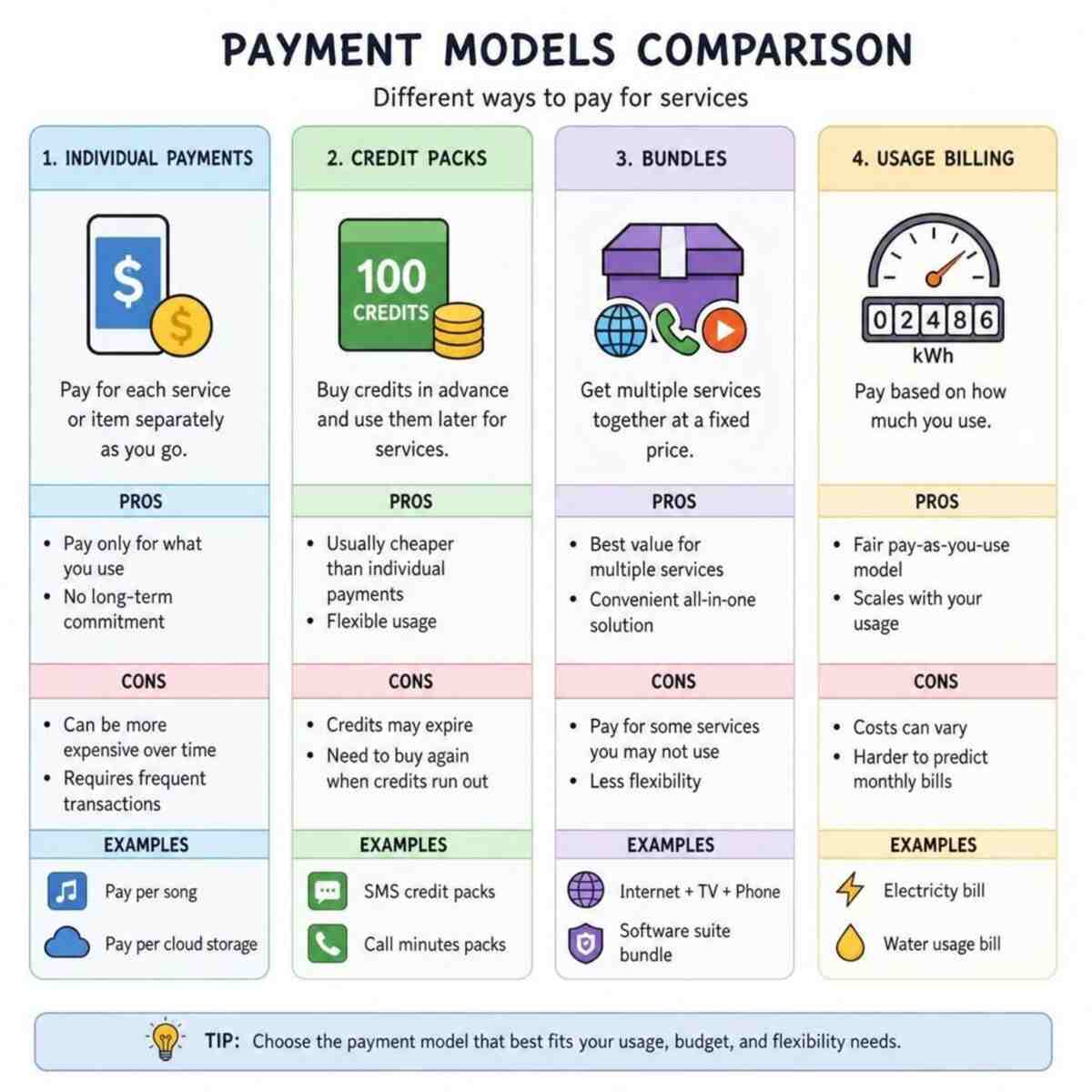
- Choose the charging model: Compare individual payments, bundles, credits, and usage billing.
- Check the economics: Include payment fees, delivery costs, support, and refunds.
- Select and connect the tools: Match the provider to your website and requirements.
- Test and launch carefully: Confirm payment, delivery, reporting, and customer support work together.
Give each step a named owner, even if one person handles several jobs. That makes it easier to resolve problems before customers encounter them.
Micropayments and the value of a small purchase
Micropayments are very small financial transactions, commonly associated with online content and digital services. Practical examples include paying to read an article, unlock an item, or use a tool for a limited task. Processing costs are an important consideration because fees can take a substantial share of a small payment.
For your business, the useful question is less about a universal price cutoff and more about the purchase itself. Can you separate something valuable into a small, understandable unit?
Consider these possible offers:
- A publisher sells access to one premium article.
- An educator sells a single practice worksheet.
- A design business sells one downloadable template.
- A software business charges for a completed export.
- A creator accepts an optional contribution after someone enjoys their work.
These are possible business designs, not promises of demand. Each still needs a clear description, a workable price, and a reason to buy.
Also distinguish purchasing from tipping. A purchase should explain the product, access, or service being supplied. Describe an optional contribution as support rather than implying that payment unlocks something it does not.
Try writing your offer in one sentence: “Pay once to receive this specific result.” If that sentence needs several exceptions, simplify the offer before choosing software.
Start with an offer customers can understand
Pick one product or action for your first test. Avoid launching with a complicated menu of tiny charges that customers have to study before they can begin.
A useful starting offer should have a visible outcome. “Download this editable checklist” tells customers more than “unlock premium resources.” “Export this finished file” is clearer than “buy extra functionality.”
Show enough of the product to support an informed decision. For a document, that might mean a preview page and a list of included sections. For a tool, it might mean explaining the output format, usage limit, and what happens if processing fails.
Before building anything, complete this offer worksheet:
| Decision | What to write down |
|---|---|
| Purchase unit | The exact article, file, action, or period of access |
| Customer outcome | What the buyer can do after paying |
| Access terms | Whether access is ongoing, time-limited, or single-use |
| Delivery method | Where and how the customer receives the purchase |
| Support route | How someone reports a missing or incorrect purchase |
| Alternative | What remains available without buying |
Keep your existing products in view. If you already sell subscriptions, decide how single purchases should sit alongside them. You might position individual purchases for occasional visitors and subscriptions for frequent users, then test whether customers understand that distinction.
For example, keep a full-course offer intact while testing a separately useful worksheet. Do not remove essential instructions merely to create more paid steps. The small purchase should solve a small problem completely, rather than leave the buyer needing another purchase to get the promised result.
Which micropayment model fits your business?
The right model depends on what customers buy, how often they return, and whether each purchase can support a separate processing charge. Compare direct payments, prepaid credits, bundles, and usage-based billing before committing. For a first test, favor the simplest option that makes the offer understandable and the costs workable.
Individual payments
With individual payments, the customer pays for one item or action at a time. You could offer one downloadable file or access to one clearly identified resource.
This model keeps the commitment easy to explain: the customer pays for the thing in front of them. However, calculate the fee for each separate payment rather than assuming a small price automatically creates a low-cost sale.
Choose this approach when the purchase stands on its own. Make sure returning customers can find what they already bought without accidentally paying again.
Prepaid credits
With prepaid credits, customers make an upfront purchase and spend the resulting balance on smaller actions within your service. For example, you could sell a credit pack that covers several document exports.
If you test this model, show the money-to-credit conversion plainly. Explain the cost of each action, display the remaining balance, and make any restrictions easy to find. Avoid requiring people to calculate several exchange rates just to understand a price.
Treat credits as a separate operational project, not a shortcut. Before offering them, plan balance tracking, refunds, account recovery, unused balances, and professional review of the arrangement.
Bundled purchases
A bundle combines several small items into one purchase. Instead of charging separately for each worksheet, for example, you could sell a themed set.
This gives you one checkout for the set while keeping the purchase relatively small. Keep the bundle coherent: a collection that solves one problem is easier to explain than a pile of unrelated extras.
List what is included and whether items can also be bought individually. If you describe a saving, calculate it against genuine, applicable individual prices rather than an invented comparison.
Accumulated usage billing
With accumulated usage billing, you record customer activity and charge according to an agreed schedule or threshold. You might consider it for a service where people perform many small actions.
Before testing it, define the billable action, the price, the billing point, and the spending controls. Customers should be able to inspect their usage and understand what they owe before a charge arrives.
Keep this distinction clear: reducing the number of charges does not remove the need for accurate records. If your team cannot explain and verify the usage calculation, start with a simpler model.
How much does each micropayment actually earn?
Each micropayment earns less than its displayed price once you subtract the costs associated with the sale. Start with the payment fee, then account for delivery, refunds, customer support, and other relevant expenses. Use the amount left over—not transaction count alone—to judge whether the offer deserves a wider launch.
Calculate the processing cost
For a pricing plan with a percentage fee and a fixed charge, use this formula:
Processing fee = purchase amount × percentage rate + fixed charge
Here is a made-up example for practice, not a provider quote. Suppose processing costs 3% plus $0.20 per transaction:
| Purchase price | Illustrative processing fee | Left before other costs |
|---|---|---|
| $0.50 | $0.215 | $0.285 |
| $1.00 | $0.23 | $0.77 |
| $5.00 | $0.35 | $4.65 |
The table keeps fractions of a cent to show the calculation. Actual billing and rounding depend on the provider. In this example, the fixed charge takes a much larger share of the smallest purchase.
Do not copy these hypothetical fees into your forecast. Use the written pricing that applies to your account, payment method, currency, and customer location.
Include more than the headline rate
Ask providers about minimum charge amounts as well as fees. A platform may not support every tiny amount you want to collect; Stripe, for example, documents minimum charge amounts that depend on settlement currency and other conditions.
Build a cost worksheet with separate lines for:
- Payment processing and any platform charge.
- Product delivery, storage, or computing costs.
- Refund-related costs and disputed payments.
- Customer service time.
- Currency conversion and international charges, where applicable.
- Ongoing software and maintenance costs.
Some costs happen with each purchase; others are monthly or occasional. Keep those categories separate so you can see both the contribution from one sale and the overall cost of running the offer.
For your own planning, divide an estimated monthly fixed cost by the expected contribution per sale. That gives you a rough sales requirement to investigate, not a sales forecast. If the resulting volume seems unrealistic, change the offer before spending heavily on development.
Test a small price range
Create a cautious, expected, and stronger-demand scenario. Vary purchase volume, repeat buying, and support needs rather than assuming every visitor becomes an easy sale.
Then compare an individual purchase with a sensible bundle. Ask whether the customer still sees good value and whether the leftover amount supports the work involved.
Finally, consider your existing revenue. A test that attracts new buyers deserves a different interpretation from one that simply moves current subscribers into cheaper purchases. Track that distinction before calling the experiment a success.
Choose micropayment systems by practical fit
Compare micropayment systems against your requirements, not just a familiar logo or an attractive headline fee. Write down what your first offer needs, then ask each provider to confirm those points.
Dedicated small-payment pricing is worth investigating, but do not assume it is automatic. PayPal’s U.S. merchant fee documentation, for example, says merchants may apply for micropayment pricing for certain lower-value transactions. Its user agreement also distinguishes eligible payment types and approved pricing arrangements. Confirm what applies to your account before building your forecast around it.
Use a shortlist like this:
| Requirement | What to confirm |
|---|---|
| Business eligibility | Your product category and charging model are supported |
| Purchase amount | Your intended price meets applicable minimums |
| Payment options | Your audience can use the offered methods |
| Website connection | The integration works with your actual setup |
| Delivery support | Successful payments can trigger the access you need |
| Reporting | You can export charges, fees, refunds, and payouts |
| Customer support | You have a clear route for urgent payment problems |
| Exit options | You understand what data can move if you leave |
Ask about account approval, payout timing, refund treatment, and any conditions affecting access to funds. Get important answers in writing and keep them with your launch notes.
If you use a website plugin, assess it separately from the payment provider. Ask who maintains it, which functions it supports, and how updates are tested. A compatible checkout button does not, by itself, confirm that your purchase history, credit balances, or access controls will work.
For a broad-audience pilot, start by comparing options your prospective customers already understand. Add a less familiar payment method only when you have a clear customer need and can explain its practical trade-offs.
Design a clear purchase and checkout experience
Your checkout should answer the buyer’s practical questions without making them search through several pages. State what they receive, the total they will pay, when access starts, and whether the payment repeats.
Put important limits near the offer. If a file works only with certain software, say so before payment. If access ends after a stated period, make that visible next to the purchase description rather than mentioning it only in a receipt.
A sample purchase panel might read:
Purchase: One downloadable planning worksheet Included: The editable file and a completed example Payment: One-time purchase; no subscription Delivery: Download available after payment is confirmed Help: Contact support if your download is missing
Adapt the wording to your actual offer. Do not promise editable files, ongoing access, or instant delivery unless you can supply them.
Keep the action specific
Label the button with the action and, where practical, the price. “Buy this worksheet” is more informative than “Continue” when clicking starts a purchase.
For credits, show both the credit cost and its understandable money equivalent. Before an action uses a balance, explain what will be deducted. Give customers a purchase history so they can check what happened without opening a support request.
Ask only for information you need for payment, delivery, records, or other legitimate requirements. If an account is necessary, explain its purpose. If it is not, consider whether you can offer purchase recovery without making account creation an extra task.
Write the confirmation and failure messages
Prepare these messages before launch, not after something breaks. A successful payment should lead to a clear next action, such as opening the article or downloading the purchased file.
For a pending payment, explain that confirmation is still in progress and tell the customer what to do next. For an uncertain result, avoid encouraging an immediate second purchase before the first attempt has been checked.
Read every message on a phone and have someone unfamiliar with the project try the journey. Ask them to explain what they bought, what they paid, and how they would get help. Revise any wording that leaves them guessing.
Connect payment confirmation to reliable delivery
Collecting money and delivering a purchase are separate responsibilities. Your implementation needs to connect them, record the result, and recover when one part fails.
For a simple pilot, you might use an existing store or membership tool. For a custom service, you may need a developer. Either way, write the expected behavior in plain language before discussing technical details.
Define the purchase record
Create a record for each order with enough information to investigate it later. Agree with your developer or platform specialist on how that record connects to the payment provider and the purchased item.
A useful planning checklist includes:
- Your internal order reference.
- The item, quantity, and applicable price.
- The currency and total charged.
- The provider’s payment reference.
- Payment and delivery status.
- The customer account or agreed recovery method.
- Any refund, reversal, or support action.
Keep payment status separate from access status. That lets your support team identify cases such as “payment confirmed, download not delivered” instead of treating every problem as an unpaid order.
Use confirmed payment information
Do not grant access simply because a browser displays a success page. Stripe’s fulfillment documentation explains that customers may pay successfully without reaching that page, so automated delivery needs a dependable payment notification process. Some payment methods also confirm success later rather than during the initial checkout.
Ask your developer how the system receives and verifies those notifications. Providers often call them webhooks: messages sent from the payment service to your website when something changes. Stripe’s documentation covers signature verification and handling repeated or out-of-order events.
You do not need to learn every technical term. You do need a clear answer to this question: “How will we know this customer really paid, even if they close the browser?”
Prevent duplicate actions
Specify that retrying a payment request must not accidentally create an extra charge. Where supported, developers can use an idempotency key—a unique request reference—to retry an operation safely. Stripe documents this mechanism for avoiding accidental duplicate operations.
Also ask how repeated notifications are prevented from granting the same purchase or credits twice. Payment-request protection and delivery protection should both appear in your acceptance checklist.
For prepaid credits, include simultaneous purchases in the design discussion. Ask your developer to demonstrate that two actions started together cannot spend the same remaining balance. Keep a history of additions, deductions, and corrections so a disputed balance can be explained.
Plan recovery before launch
Decide what happens when payment succeeds but delivery fails. A sensible requirement is to preserve the order, flag the missing delivery, and provide a safe retry or support route without charging again.
Likewise, define what happens after a refund. Depending on the product and applicable obligations, you may need to change access, restore eligible credits, or update records. Document the intended outcome rather than assuming the payment tool automatically changes every connected system.
Ask the person implementing the system to demonstrate these cases, not merely confirm that they are supported. Keep the demonstration results with your launch checklist so future updates can be tested against the same expectations.
Protect payments and customer accounts
Use a payment setup that limits unnecessary handling of sensitive card information. PCI Security Standards Council materials describe fully outsourced payment-page arrangements in which the merchant does not receive the customer’s card data. Confirm your own security and validation responsibilities with your payment provider or merchant bank rather than assuming outsourcing removes them.
For your first implementation, ask whether an established hosted checkout can meet your requirements. Compare it with a custom approach based on maintenance, accessibility, delivery integration, and security responsibilities—not appearance alone.
Protect the administrative side too. Require strong account security for people who can issue refunds, change payment settings, or export customer records. Limit permissions to the work each person actually needs to do.
Small charges still need fraud controls. Stripe documents card testing, where criminals use payment attempts to check stolen card details, including through small payments. Warning signs can include a sharp increase in failed or blocked attempts.
Ask your provider and developer to help you define:
- Alerts for unusual payment attempts or failure patterns.
- Limits on repeated checkout attempts.
- A response process for suspected abuse.
- A way to pause new purchases while investigating.
- Controls against unauthorized refund or account changes.
Balance these controls with legitimate customer access. If you add a safeguard, test whether ordinary buyers can still complete the purchase and recover from mistakes.
Document who reviews alerts and who can act on them. An alert that nobody owns is not a complete response plan.
Review refunds, credits, taxes, and records
Make policy decisions before customers begin paying. Payment software can process transactions, but your business still needs to decide how it will explain purchases and resolve problems.
Write a short refund policy using situations buyers will recognize. Cover missing delivery, accidental duplicate purchases, incorrect items, and any product-specific restrictions that have been professionally reviewed where necessary.
Check the financial treatment with your provider. For example, Stripe’s refund documentation says its original processing fees are not returned when a payment is refunded, and additional refund costs may apply. Do not assume refunding a sale returns every associated expense to your business.
If you offer credits, take a written description of the arrangement to qualified advisers. Ask them to review how balances are purchased, used, refunded, transferred, or left unused. Do not invent an expiry or “nonrefundable” rule simply because it is convenient to configure.
Give your accountant a sample journey from purchase through delivery and refund. Ask what information must be retained, how taxes should be handled for your products and markets, and how prepaid balances should be recorded. Get advice specific to your setup rather than treating a payment dashboard as your accounting policy.
For each payout, plan to reconcile customer payments, fees, refunds, adjustments, and the amount reaching your bank. Keep customer credits visible in your records as a separate category for review.
Start with a geographic scope your team can support. Before expanding, repeat the review for the new markets rather than assuming the original arrangement applies everywhere.
Test the complete customer journey
Test the system before inviting real customers to rely on it. Use the provider’s designated testing tools; Stripe, for example, offers isolated environments where simulated transactions do not move real funds. Follow the selected provider’s instructions for test payments and any final live checks.
Do more than complete one successful purchase. Your test plan should cover payment, delivery, account access, refunds, reporting, and the messages customers see when something goes wrong.
Use this acceptance checklist:
- Successful payment: The correct item becomes available and the receipt matches the order.
- Declined payment: No paid access is granted, and the message explains the next step.
- Repeated submission: The customer does not receive an unintended duplicate charge.
- Closed browser: A completed payment is still recorded and the purchase can be recovered.
- Delayed confirmation: The order remains clearly pending until its result is known.
- Repeated notification: The system does not add duplicate access or credits.
- Delivery failure: The order stays traceable and can be resolved without another payment.
- Refund: Payment records and any affected access or balance follow your policy.
- Account recovery: The buyer can find a legitimate route back to the purchase.
- Reporting: The order can be traced through the provider’s reports and payout records.
For credits, test the final available credit, an insufficient balance, two simultaneous actions, and an interrupted action. Decide in advance whether an unsuccessful action consumes anything, then verify that behavior.
Test on the devices and browsers your audience is likely to use. Include keyboard navigation, readable error messages, and a purchase flow that remains usable when text is enlarged.
Finally, ask someone outside the project to buy a test item without coaching. Watch where they hesitate, then fix the explanation or behavior. Confusion during a practice purchase is useful feedback, not a reason to rush past the test.
Launch with a limited, measurable pilot
Introduce the offer to a manageable audience before placing it across your whole site. Choose a pilot size your team can support and a review point based on enough real activity to investigate.
Write down the purpose of the pilot. For example: “Test whether occasional visitors will buy an individual worksheet while delivery and support remain manageable.” That is more useful than a vague target to increase transactions.
Prepare a launch sheet containing:
- Scope: The offer, audience, markets, and payment methods included.
- Ownership: Who handles technical issues, refunds, and customer questions.
- Checks: Which reports and alerts someone reviews.
- Pause conditions: Problems that require stopping new purchases.
- Recovery: How existing buyers retain access or receive help during a pause.
- Review date: When the team will assess the evidence and choose the next step.
Examples of sensible pause conditions include unexplained duplicate charges, repeated missing deliveries, or balances that cannot be reconciled. Set your own thresholds with the people responsible for operations and risk.
Keep a short change log during the pilot. Record price changes, wording edits, technical fixes, and unusual incidents so you can interpret results in context.
Avoid changing everything at once. If you change the price, bundle, checkout, and audience at the same time, it becomes harder to tell what affected the outcome.
Measure profit, reliability, and customer understanding
Judge online micropayments by what they contribute to the business and how well they serve buyers. A growing transaction count is only one part of that picture.
Create a simple scorecard that combines commercial results with delivery and support:
| Measure | What it helps you investigate |
|---|---|
| Offer views | How many people had a chance to consider buying |
| Completed purchases | Whether the offer attracts paying customers |
| Checkout completion | Where attempted purchases succeed or stop |
| Contribution after variable costs | What sales leave toward fixed costs and profit |
| Successful delivery | Whether confirmed buyers receive the right purchase |
| Refunds and disputes | Where expectations, quality, or authorization need review |
| Support time | How much work the offer creates beyond delivery |
| Repeat purchases | Whether customers choose to buy again |
| Existing-plan changes | Whether the offer complements or replaces other revenue |
Define each measure before comparing results. For example, decide whether “completed purchase” means confirmed payment or delivered access, and keep that definition consistent. Track both if the difference matters to your operation.
Separate first-time purchases from repeat buying. For credits, distinguish buying a pack from using the balance. Those are different customer actions and should not be counted as the same kind of success.
Read support messages alongside the numbers. Repeated questions about access suggest a delivery or explanation problem; repeated surprise about charges suggests the purchase journey needs attention. Fix the underlying issue rather than only answering each ticket.
When reviewing the pilot, choose one of three actions: expand, revise, or stop. Expand when demand, costs, reliability, and support all meet your agreed requirements. Revise when the problem is specific and testable. Stop when the offer cannot justify its costs or creates problems you cannot responsibly resolve.
Keep the first version simple
Implementing online micropayments in your business starts with a clear offer, not an elaborate payment setup. Choose one useful purchase, calculate its costs, connect confirmed payment to dependable delivery, and test the difficult cases before launch.
Use the first pilot to learn whether customers understand the offer and whether each sale supports the work behind it. Then improve what the evidence points to. A small, reliable system with clear pricing and helpful support is a better starting point than a complicated system built around untested demand.
