



It happens to the best of us. You are tired, running late, or simply distracted at the petrol station, and suddenly you realize you have grabbed the wrong pump nozzle. Panic sets in as you wonder what to do if you add the wrong fuel (and the cost of wrong fuel recovery services). What do you consider about What to do if you add the wrong fuel.
Take a deep breath. Misfuelling is an incredibly common mistake, happening to hundreds of motorists every single day. The most important thing to remember is that the faster and smarter you act, the less damage you will do to your engine and your bank account.
Here is your comprehensive guide to handling a misfuelling mishap safely, efficiently, and cost-effectively.
The Golden Rule: Do Not Start Your Engine!
If you realize your mistake while still at the pump, you are in the best possible position. The absolute most critical rule is to leave your keys out of the ignition.
Understanding what happens if you start a misfuelled engine is crucial. When your engine is off, the incorrect fuel remains safely in the fuel tank. The moment you turn the key in the ignition—even just to engage the battery or roll down the windows—your car’s fuel pump primes, drawing contaminated fuel into the fuel lines and the engine. What could have been a straightforward tank drain can quickly become a catastrophic, multi-thousand-dollar engine repair.
If you need to move your vehicle away from the pump to free up space, put the car in neutral and manually push it to a safe parking spot.
Petrol in a Diesel vs. Diesel in a Petrol Car
The severity of a misfuelling incident depends heavily on which fuel you put into which engine.
Putting Petrol in a Diesel Vehicle
This is the most common and most dangerous scenario. Diesel acts as a necessary lubricant for the engine’s internal components. Petrol, however, acts as a harsh solvent. If mixed, the risk of high-pressure fuel pump damage is immense, as the sudden lack of lubrication causes bare metal components to grind against each other, creating microscopic metal shards that destroy the engine from the inside out.
If you unknowingly drive off, you will quickly experience the symptoms of petrol in a diesel engine. These include:
- Loud engine knocking sounds
- Excessive smoke billowing from the exhaust
- Sluggish acceleration and a sudden loss of power
- The vehicle abruptly stalling and refusing to restart
Left untreated, this can cause severe system damage, often signalled by common rail injector failure symptoms such as rough idling, severe fuel leaks, and complete engine failure.
Putting Diesel in a Petrol Vehicle
Putting diesel in a petrol car by mistake is physically harder because diesel nozzles are typically larger than the filler necks on modern petrol cars. However, if it happens, it is slightly less catastrophic. Diesel requires higher compression to ignite, so a petrol engine simply won’t be able to combust it. Your spark plugs will foul, the engine will smoke heavily, and the car will stall. It still requires a professional flush, but the long-term risk of damage is much lower.
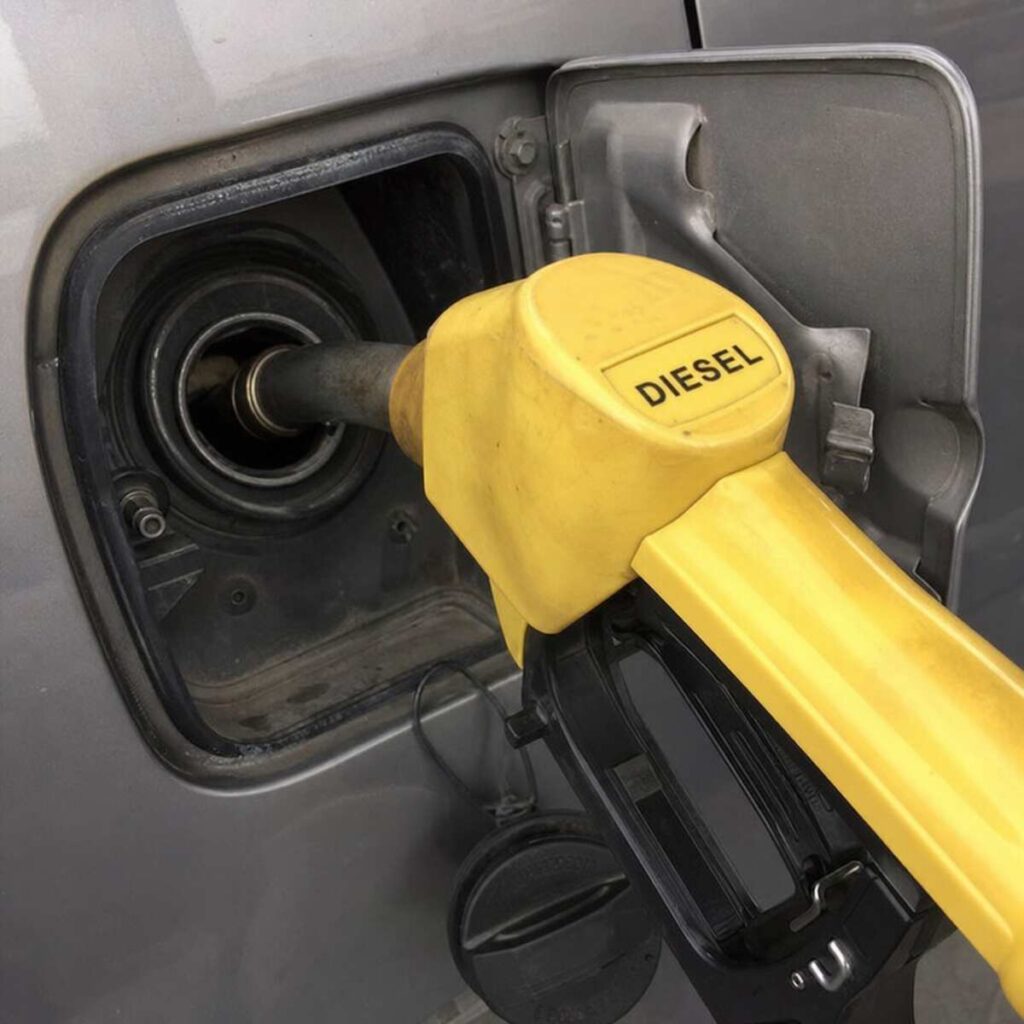
Immediate Steps to Take After Misfuelling
Once you are safely parked with the engine off, it is time to call in the professionals.
- Tell the station attendant that your car will be blocking a space for a short while.
- Search locally: Use your smartphone to search for a “wrong fuel recovery near me“. Local specialists can often reach you faster than national call centers.
- Call for help: Contact a dedicated 24 hour emergency fuel drain service or reach out to your insurance provider to see if they offer roadside assistance for misfuelled vehicles.
You might be tempted to try a quick DIY fix, but there are strict reasons why you should not syphon fuel at home. Modern fuel tanks are fitted with complex anti-siphon valves, making it nearly impossible to extract the fuel completely with a simple hose. Furthermore, mishandling highly flammable liquids is incredibly dangerous and violates strict regulations governing fuel tank drainage and disposal. Contaminated fuel is a hazardous waste that must be processed at licensed environmental facilities.
Understanding the Cost of Wrong Fuel Recovery Services
Let’s talk numbers. The average price for professional fuel drainage typically ranges from £150 to £300 (roughly $200 to $400), depending on several factors.
When calculating the final bill, you have to consider various mobile fuel evacuation price factors:
- Time of day: Late-night, weekend, or holiday callouts usually carry a premium.
- Location: If you are stranded on a busy motorway, recovery might be more expensive than if you are parked safely on a local petrol forecourt.
- Amount of fuel: Disposing of 60 liters of contaminated fuel costs the recovery company more in environmental fees than disposing of 10 liters.
When weighing your options, consider the logistics of mobile fuel extraction vs. towing to a garage. A mobile wrong fuel recovery service will come directly to your location, drain the tank, flush the system, and have you back on the road in about 45 to 60 minutes. Towing your car to a traditional garage incurs separate towing fees, higher hourly mechanic rates, and will likely leave you without a vehicle for days. Mobile extraction is almost always the faster and more cost-effective choice.
Does Insurance Cover the Mistake?
A frequently asked question is: does car insurance cover wrong fuel removal? The answer varies widely by provider. Some premium comprehensive policies include misfuelling cover as a standard feature, while others explicitly exclude it.
Even if you are covered, be cautious. Claiming through your insurance might require you to pay an excess fee that ends up costing more than paying for the fuel drain out of pocket. Furthermore, making a claim could negatively impact your no-claims bonus, raising your future premiums. Always read the fine print of your specific policy, but paying directly for wrong fuel recovery is often the smartest financial move.
The Professional Drainage Process
When the mobile technician arrives, they are fully equipped and know exactly how to safely flush a contaminated fuel system.
The process typically involves:
- Pumping out the mixed fuel from the main tank using specialized, ATEX-approved pumping equipment.
- Disconnecting the fuel lines to purge any contaminated fuel that has made its way toward the engine.
- Replacing the fuel filter (highly recommended if the engine was started).
- Providing a small amount of the correct fuel to prime the engine, ensuring no airlocks or contaminated residue remain before you drive away.
How to Prevent Misfuelling in the Future
The best way to save money on a fuel drain is to never need one in the first place. If your household has both petrol and diesel cars, or if you frequently drive rental vehicles, it is easy to default to muscle memory at the pump.
To protect your engine, consider purchasing misfuelling-prevention devices for diesel cars. These clever mechanical inserts replace your vehicle’s standard fuel cap. They feature a specialized locking mechanism that only opens when the wider diesel nozzle is inserted, physically blocking the narrower petrol nozzle from entering the tank. For a small upfront cost, they offer permanent peace of mind.
Final Thoughts
Putting the wrong fuel in your car is an annoying disruption, but it doesn’t have to be a disaster. By keeping the engine off and immediately calling a professional fuel-drain specialist, you can mitigate damage and get back to your day. Remember, the cost of a swift, professional extraction is a small price to pay compared to replacing an entire engine system!
