


Virtual CFO services give you access to financial planning and leadership without the cost of a full-time executive hire. Depending on the engagement, that support can include cash flow forecasting, budgeting, performance reviews, and help evaluating major business decisions. Choosing the right provider means looking beyond the title and checking what they will actually do, how they explain their advice, and whether their approach fits your needs. Check out https://usfractionalcfo.com/virtual-cfo-services/ to know more
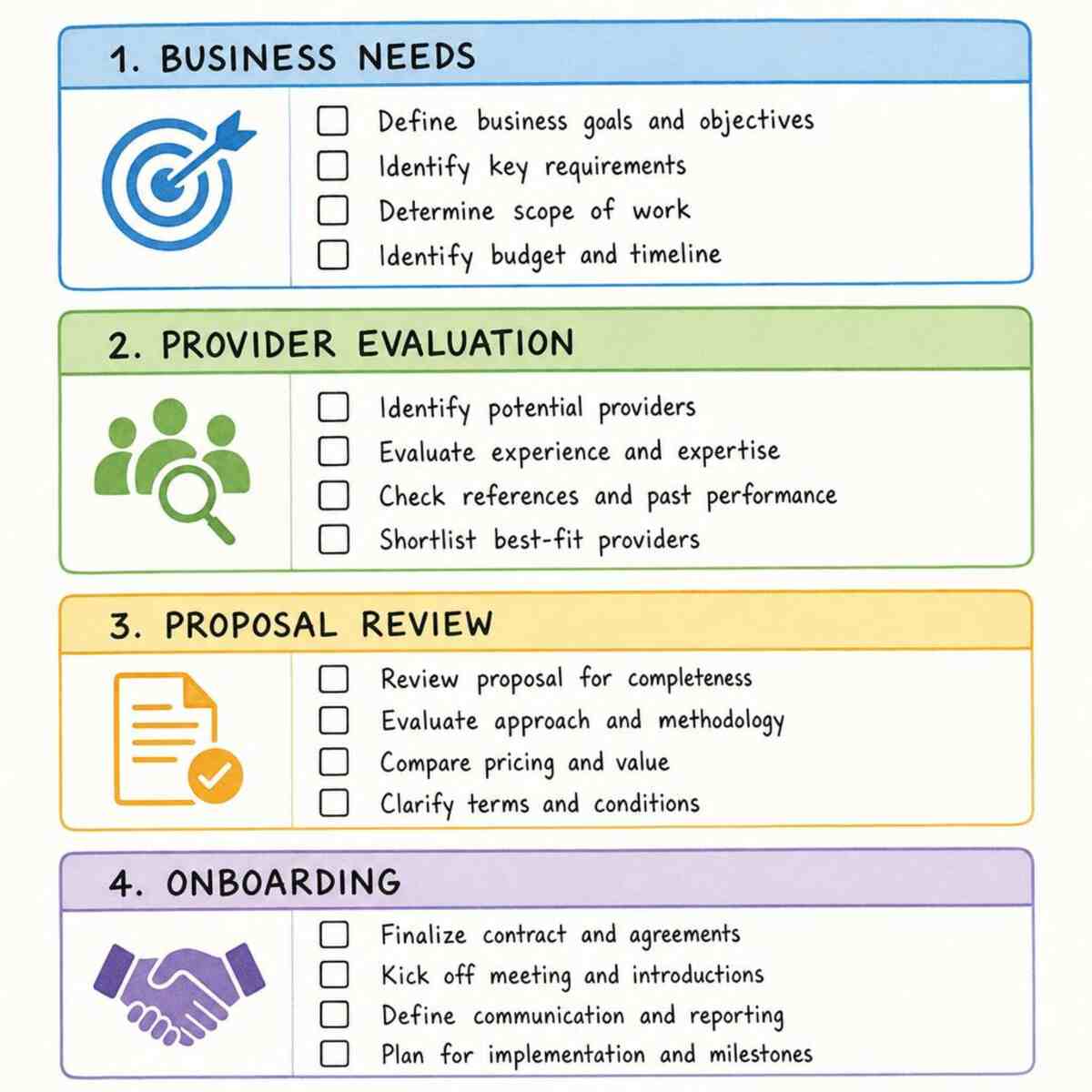
This article walks you through that choice, from defining the problem you need solved to comparing proposals and setting up the working relationship. You don’t need to become a finance expert first. You do need a clear way to judge the people offering to help.
What does a virtual CFO actually do?
A virtual CFO provides financial guidance remotely, helping a business understand its position, plan ahead, and evaluate decisions. The work should connect financial information to practical choices, rather than stop at producing reports. Service packages vary, so confirm whether a provider includes forecasting, accounting oversight, strategic advice, or a combination of these.
Think about the difference between receiving a report and discussing what to do next. A report might show that spending exceeded the budget. The conversation you want from a CFO-level adviser is more useful: what caused the difference, whether it matters, and what options you have now.
For example, imagine you’re considering another employee. Ask a candidate to explain how they would assess that decision. You want to hear about the timing of the cost, the work the employee would support, the assumptions behind expected revenue, and what happens if that revenue arrives later than planned.
That gives you a much clearer view of their thinking than a long list of services.
Separate financial leadership from accounting tasks
Before comparing providers, write down which responsibilities already have an owner. The Small Business Administration recommends ensuring someone manages essentials such as accounts receivable, accounts payable, available cash, bank reconciliation, and payroll. Use that foundation to identify what additional support you need.
Here is a practical way to organize your requirements. Treat these as work categories to assign, not fixed rules about job titles.
| Work category | What to clarify with a provider |
|---|---|
| Transaction processing | Who records activity, handles bills, and maintains the records? |
| Accounting review | Who checks reconciliations, resolves errors, and oversees reporting? |
| Tax work | Who prepares filings and provides tax-specific advice? |
| Financial planning | Who builds budgets, forecasts, and decision models? |
| Leadership support | Who explains trade-offs and helps management choose actions? |
One firm may propose several categories together. Another may expect to work alongside your existing accountant. Neither setup is automatically better; judge the arrangement by whether every necessary task has a clear owner.
Clarify the terminology
You may encounter providers using “virtual,” “fractional,” and “outsourced CFO” to describe their offer. Rather than choosing by label, ask each candidate to explain the proposed arrangement in plain language.
Will they advise you regularly, lead particular projects, supervise other finance staff, or simply meet to review results? Get that answer before comparing packages. A familiar title is not a substitute for a clear description of the work.
Decide whether financial leadership is your main need
Start with the problem, not the service. Before contacting providers, list the financial questions you’re struggling to answer and the tasks that keep getting delayed. Keep the list honest and specific.
“We need better financial support” is too broad to guide a search. “We need to know whether we can afford another location before signing a lease” gives a candidate something useful to respond to.
Your first exercise is simple: finish these three sentences.
- The decision we keep postponing is… Name a real choice, such as hiring, changing prices, or buying equipment.
- The number we don’t trust or understand is… Identify the missing information, whether that’s available cash, project profitability, or expected spending.
- The financial task that keeps breaking down is… Describe the process problem, including who currently handles it.
Review the answers together. If your main difficulty is incomplete records, ask for an assessment of the accounting work before buying a large advisory package. If you have usable reports but struggle to turn them into plans, make decision support a central requirement.
Also consider how much involvement you actually want. Do you need someone to challenge your plans every month, or help with one defined decision? Don’t assume an ongoing arrangement is necessary just because that is the first option presented.
Consider the limits of an external arrangement
Describe the access and authority the role requires. If you expect someone to attend daily management discussions, supervise a large team, and handle urgent matters throughout the working day, say so early. Ask candidates how they would meet those expectations and where their availability ends.
An external arrangement should be a deliberate choice, not a way to avoid defining the job. Compare it with other options, including improving an existing process, engaging a specialist for a project, or hiring internally. The right answer addresses your actual gap without leaving important work unattended.
Write a short brief before requesting proposals
Give every candidate the same starting information. That lets you compare their responses to your needs rather than compare unrelated presentations.
Your brief does not need polished business language. A clear page describing the business, the problem, and the decisions ahead is more useful than an impressive document that avoids the difficult details.
Include the following:
- Business context. Explain what you sell, how customers pay, and any major changes you’re considering.
- Current finance setup. Identify who handles bookkeeping, reporting, payroll, and tax work.
- Main concerns. Choose a few priorities rather than listing every possible improvement.
- Decisions ahead. Note upcoming hiring, spending, financing, or expansion choices.
- Support needed. Describe the work you want help with and how involved you expect the adviser to be.
- Known constraints. Mention deadlines, staff capacity, data problems, and budget boundaries.
Be candid about the condition of your information. If reports arrive late or some accounts have not been reviewed, state that directly. Ask the provider to distinguish initial assessment or cleanup work from the ongoing engagement.
Define useful outcomes
Turn each concern into an outcome you could recognize. Instead of “improve cash flow,” write “establish a forecast we can update and use before approving major spending.” Instead of “better reporting,” write “receive a concise review that explains the main changes and assigns follow-up actions.”
Keep the outcome within the provider’s influence. “Guarantee stronger sales” is not a sensible requirement for this engagement. “Show how different sales assumptions affect the hiring plan” is something you can discuss, scope, and evaluate.
Finally, identify your own internal contact. Decide who will supply information, attend meetings, and make decisions. Include that person in the selection process so the proposed relationship works for the people who will actually use it.
Evaluate relevant experience and individual responsibility
Ask candidates to connect their experience to your specific concerns. Don’t stop at whether they have worked in your industry. Find out whether they have handled the kind of financial decisions, operating pressures, and information problems described in your brief.
For instance, ask how they would approach a business with seasonal demand, several service lines, or customers who pay well after delivery. You’re looking for thoughtful questions and a clear method, not an instant diagnosis based on a few sentences.
Useful prompts include:
- “Which parts of our situation are familiar to you, and which would require more investigation?”
- “What information would you request before advising us?”
- “Describe a comparable type of assignment without sharing confidential client details.”
- “What did you personally do, rather than the wider firm?”
- “Where would you involve another specialist?”
That last question deserves attention. Ask the candidate to identify the boundaries of their proposed role. A clear explanation of what they won’t cover gives you something concrete to plan around.
Verify the person behind the proposal
If you’re hiring a firm, meet the person who will lead your engagement. Ask who will prepare the work, who will review it, and who will attend your meetings. Confirm whether the person presenting the proposal will remain involved after you sign.
Request a straightforward explanation of relevant qualifications and experience. If a candidate presents a professional credential, verify it through the appropriate issuing organization. Treat credentials as one part of your review, alongside their reasoning, communication, and proposed delivery.
Also ask about continuity. Who steps in during an absence? How are decisions and assumptions documented? You should understand how the relationship would continue without having to rebuild all the background yourself.
Use references to test the working relationship
With permission, speak to references whose engagements resemble the support you need. Ask what the adviser actually delivered and how the relationship worked when information was late, priorities changed, or a recommendation was challenged.
Keep questions concrete: Were meetings useful? Were responsibilities clear? Did the adviser explain uncertainty? What required more internal effort than expected? Avoid asking only whether the client was happy. You need detail that helps you decide whether the same approach would suit you.
Examine the proposed work, not just the service list
A list of capabilities tells you where a provider might help; it does not tell you what your engagement will deliver. Outsourced finance offerings can include cash forecasting, financial modeling, project costing, accounting cleanup, and financial close support. Ask candidates to separate the work included in your proposal from services available at an additional cost.
For each major deliverable, request a plain explanation of its purpose, inputs, update schedule, and intended user. Then ask what decision it should support. If the connection remains vague, keep discussing the requirement before treating it as essential.
Cash flow forecasting
For a proposed cash forecast, ask how the provider would estimate incoming and outgoing payments. Request an explanation of the assumptions they would need from your team and how those assumptions would be checked.
Make the discussion practical. How would an overdue customer payment change the forecast? Where would planned hiring appear? How would the model show an upcoming equipment payment or a change in supplier terms?
Ask for a demonstration using sample data rather than confidential client information. Have the candidate change one assumption and explain the result. You don’t need to inspect every formula, but you should understand the main drivers and know which estimates deserve the most attention.
Agree who updates the forecast between reviews. Specify whether the provider will maintain it, your team will maintain it, or responsibilities will be shared. A model without an owner should not count as a complete deliverable.
Budgets and scenario planning
If budgeting is included, ask how the candidate will connect the plan to your operations. Have them explain how staffing, sales activity, purchasing, and other important inputs would feed into the numbers.
Then ask how they would review actual results against the plan. You want a discussion of causes and choices, not just a page showing favorable and unfavorable differences. Ask how changes would be recorded so you can distinguish a revised assumption from an error.
For scenario planning, request a small number of useful alternatives. For example, you might compare the planned hiring date with a delayed start and a slower-sales case. Require the candidate to explain what each scenario would help you decide rather than produce extra versions simply because the software allows it.
Profitability analysis and management reporting
For profitability work, ask which products, services, projects, or customer groups the provider proposes to examine. Have them explain how costs would be assigned and what limitations they expect in the available information.
Before accepting a conclusion, ask how sensitive it is to those choices. Would allocating shared costs differently change the recommendation? Which costs would remain if you stopped offering a service? Those questions help you examine the reasoning rather than accept a ranking at face value.
For management reporting, request a sample agenda or anonymized report. Look for a readable explanation of what changed, why it matters, and what action is proposed. A useful test is whether you can explain the main message back to the candidate without borrowing their jargon.
How should you compare the cost of CFO services?
Compare CFO services by matching the proposed fee to the actual scope, access, responsibilities, and deliverables. Ask each provider to quote against the same brief and explain any work they have excluded. Your aim is to understand the full proposed commitment, not simply identify the smallest headline fee.
Start by requesting a clear distinction between setup work, recurring support, and additional projects. Ask what pricing arrangement applies to each part. If the proposal uses a retainer, hourly billing, or a project fee, have the provider explain exactly how that arrangement works for your engagement.
You don’t need to negotiate everything at once. First establish what you’re buying. Then discuss whether adjusting the scope would make the arrangement more suitable.
Build a complete cost comparison
Ask every candidate to address the same cost questions:
- Initial work: What assessment, cleanup, or model-building work is required before regular support begins?
- Recurring work: Which reports, meetings, updates, and advisory activities are included?
- Access: What contact is available between meetings, and what would trigger an extra charge?
- Additional projects: How would financing support, a new location analysis, or another substantial request be priced?
- Tools and expenses: Which software subscriptions or other expenses would you pay separately?
- Scope changes: How will extra work be proposed, approved, and documented?
- Ending the engagement: What notice, final charges, or transition work would apply?
Include internal effort in your comparison. Ask what your team must prepare each week or month and who needs to attend meetings. A proposal should make those expectations visible before you commit.
Set a realistic value test
Write down how you will judge whether the engagement is useful. You might look for timely delivery, clearer explanations, a forecast you actually use, or better preparation for a specific decision.
Avoid making the value test depend entirely on a business outcome the adviser cannot control. Instead, connect their work to the quality and timeliness of the decisions it supports. For example, evaluate whether a hiring analysis clearly explains affordability and risk, not whether every assumption later proves correct.
If the proposed fee is beyond your budget, ask which work should come first. A smaller, clearly defined engagement is worth discussing. Don’t solve the budget problem by leaving the expected workload unchanged and assuming the provider will somehow absorb it.
What should you ask during a virtual CFO interview?
Ask questions that reveal how the candidate gathers information, explains uncertainty, recommends action, and follows through. Use the same core questions for every candidate, then add follow-ups based on your brief. A strong interview should show you how working together would feel, not just confirm that the candidate knows financial terminology.
Give candidates enough context to respond thoughtfully. At this stage, use a simplified description of your situation and avoid sharing sensitive records unnecessarily. You’re testing their approach, not asking them to complete an unpaid consulting assignment.
Test the reasoning behind the advice
Try these five questions:
- “What would you review first?” Ask them to explain their priorities and what they would need to learn before making recommendations.
- “What would make you question the information?” Listen for how they would identify gaps, resolve inconsistencies, and communicate limitations.
- “How would you evaluate our next major decision?” Ask them to identify options, assumptions, risks, and the information needed to compare them.
- “What happens when results differ from the forecast?” Find out how they would investigate the difference and update the plan.
- “How do you turn a recommendation into follow-up work?” Ask who records actions, checks progress, and raises unresolved issues.
After each answer, ask for an example of the process or a sample output. Keep the focus on work the candidate can discuss without exposing another client’s information.
Test communication with a simple explanation
Choose a topic you genuinely find confusing. Ask the candidate to explain it as if you were discussing it with a colleague who has no finance background. Then ask a follow-up question.
Notice whether they adjust the explanation, check your understanding, and remain comfortable with basic questions. You should not have to pretend to understand an answer to keep the meeting moving. Equally, ask for enough depth to see that the simple explanation rests on sound reasoning.
Check how they handle disagreement
Offer a hypothetical disagreement: “Suppose we want to proceed with an expansion, but your analysis suggests waiting.” Ask how they would present the concern and what they would do next.
Look for a clear explanation of the evidence, the uncertain assumptions, and the available choices. Ask how they would document the discussion and what information might change their recommendation. You’re not looking for someone who always agrees with you or someone who treats every disagreement as a contest.
After the interview, write down specific observations while they’re fresh. Replace impressions such as “seemed impressive” with evidence such as “explained the forecast assumptions clearly and identified missing information before advising.”
Agree on communication and availability
Describe the working rhythm you need before accepting a proposal. Include routine meetings, report delivery, follow-up questions, and urgent decisions. Ask the candidate to explain what they can commit to rather than assuming “ongoing support” covers every situation.
Create a short communication plan with these details:
- Main contact: Name the person responsible for the relationship on each side.
- Meeting schedule: Agree when reviews happen and who should attend.
- Preparation: State when information and meeting materials must be ready.
- Response expectations: Define how ordinary questions and urgent requests will be handled.
- Action tracking: Decide where decisions, owners, and deadlines will be recorded.
- Absence cover: Identify what happens when a key person is unavailable.
Ask how meetings will stay focused. A practical agenda might cover important changes, forecast updates, decisions needed, and outstanding actions. Request that structure if you want the conversation to lead to next steps rather than drift through every line of a report.
Also discuss how the adviser will work with your existing team. Who can contact them directly? Who resolves conflicting instructions? Who supplies operational information that sits outside the accounting system?
Before choosing, have at least one conversation with the person who will attend your regular reviews. Use it to check whether the proposed schedule, communication style, and level of detail suit you. Don’t leave those questions until the first formal meeting.
Check data security and system access
Make security part of the selection process. The Federal Trade Commission advises businesses to assess vendor security, limit access to what the vendor needs, use multifactor authentication, and address security expectations in vendor contracts. Apply those principles when discussing access to financial systems and records.
Ask the candidate to describe their practices in terms you can understand. If your business has an IT or security contact, involve that person before access is granted.
Your review should cover:
- Accounts and permissions: Which systems will each person need, and what actions will they be allowed to perform?
- File sharing: How will sensitive documents be transferred and stored?
- Device security: What requirements apply to devices used to access your information?
- Other people involved: Will subcontractors or additional team members receive access?
- Incident handling: Who will contact you if information is exposed or an account is compromised?
- Offboarding: How will access be removed and information returned or deleted?
The FTC also recommends putting vendor data-handling expectations in writing and establishing ways to verify compliance rather than relying only on assurances. Ask what evidence supports the provider’s answers, and have your security adviser assess it where appropriate.
Separately, define payment authority. Specify whether the provider may view information, prepare payments, approve transactions, or do none of those things. Keep advice, preparation, and approval responsibilities explicit. Don’t grant broad access simply because it makes onboarding easier; decide what the work actually requires first.
Put the scope and responsibilities in writing
Before signing, reconcile the proposal with everything discussed during selection. The written agreement should make the work understandable to someone who did not attend the sales meetings. If an important promise exists only in your notes, ask for it to be addressed.
Guidance published through the AICPA insurance program emphasizes defining the scope of CFO-related services, avoiding overstepping management responsibilities, and leaving binding agreements and contracts to the business owner. Use that distinction to clarify where advice ends and your decision-making responsibility begins.
Review these areas carefully:
| Agreement area | What to make explicit |
|---|---|
| Included work | Named deliverables, responsibilities, and recurring activities |
| Excluded work | Tasks requiring another provider or separate approval |
| Delivery | Due dates, dependencies, and expectations for your team |
| Authority | Who advises, prepares, reviews, approves, and signs |
| Fees | Payment terms and approval of additional charges |
| Confidentiality | Handling of sensitive information and permitted access |
| Ownership and access | Rights to reports, models, files, and system accounts |
| Ending the work | Notice, handover responsibilities, and access removal |
Ask what happens when your team supplies information late or the provider discovers unexpected accounting problems. Agree how revised deadlines and additional work will be discussed. Neither side should have to guess how a disrupted month changes the plan.
Also ask about incentives. If the provider recommends software, lenders, or other service firms, request disclosure of any financial relationship connected with that recommendation. Decide how you want to handle those situations before they arise.
Read the exit terms while everyone is still enthusiastic about starting. Specify what you will receive at handover, in what format, and whether transition assistance is included. Where terms are significant or unclear, have an appropriate legal adviser review them. The goal is a clear working arrangement, not merely a signed document.
Plan the first three months around your priorities
Ask candidates to propose an initial work plan before making your final choice. Use it to test whether they understand your priorities and the condition of your records. Treat the following sequence as a discussion template, not a promise that every business can follow the same timetable.
First month: establish the starting point
Request an assessment of the current finance process, available information, and immediate risks or gaps. Agree which issues need attention first and who will resolve them. Ask the provider to distinguish verified information from estimates and unanswered questions.
At the end of this stage, aim to have an agreed priority list, a responsibility map, and a reporting schedule. You should also understand what could delay the planned work. If cleanup is needed, ask for its scope and approval process before it expands.
Second month: build the core working tools
Focus on the deliverables most closely tied to your initial brief. That might be a cash forecast, a budget review, or an analysis supporting one major decision. Avoid adding extra dashboards simply because they are available.
Review an early version together. Check whether the assumptions make sense, whether your team can supply the required inputs, and whether the output answers the intended question. Ask for changes before the format becomes routine.
Third month: use the work and review the relationship
Apply the analysis to a real discussion. Record the options considered, the decision made, and the actions assigned. Then review whether the process gave you the information you needed at the right time.
Assess delivery and collaboration separately from business results. Did agreed work arrive? Were limitations explained? Did your team meet its responsibilities? Use those answers to adjust the scope, schedule, or working method.
If a project requires a different sequence, ask the provider to explain why. A thoughtful alternative is more useful than rigidly following a template. What matters is that the plan makes the first stage of the relationship concrete and gives both sides a fair basis for review.
Compare finalists with a simple scorecard
After the conversations, compare candidates against the same criteria. Use a small rating scale, such as one to five, but write down the evidence behind each score. The number should summarize your judgment, not replace it.
| Criterion | Evidence to record |
|---|---|
| Fit with your priorities | Specific understanding of the problems in your brief |
| Relevant experience | Comparable work and a clear account of individual responsibility |
| Quality of reasoning | Thoughtful questions, explicit assumptions, and practical alternatives |
| Communication | Explanations you understand and useful responses to follow-up questions |
| Delivery and access | Named people, realistic commitments, and continuity arrangements |
| Scope and cost | Comparable deliverables, clear exclusions, and visible additional charges |
| Security and handover | Acceptable access practices and a workable exit plan |
Decide which criteria matter most before totaling scores. If you need regular help with urgent decisions, availability may deserve more emphasis than presentation quality. If a candidate does not meet a non-negotiable requirement, don’t let unrelated strengths hide that gap.
Keep a short list of unresolved questions beside the scorecard. Send those questions to the finalists and compare their written responses. This gives you another chance to check clarity and prevents an assumption from becoming the deciding factor.
Finally, revisit your original brief. Ask which candidate offers the clearest, most workable response to it. You’re choosing an outsourced CFO for the work ahead, not awarding a prize for the best interview.
Choose clear support for real decisions
The right provider should be able to explain the proposed work, show how it supports your priorities, and make responsibilities clear before you commit. Focus on the person doing the work, the quality of their reasoning, and the practical details of delivery.
Start with a short brief, give candidates the same information, and compare evidence rather than promises. Then put the agreed scope, access, fees, and review process in writing. That gives you a sensible starting point for financial support that you can understand and use.
