


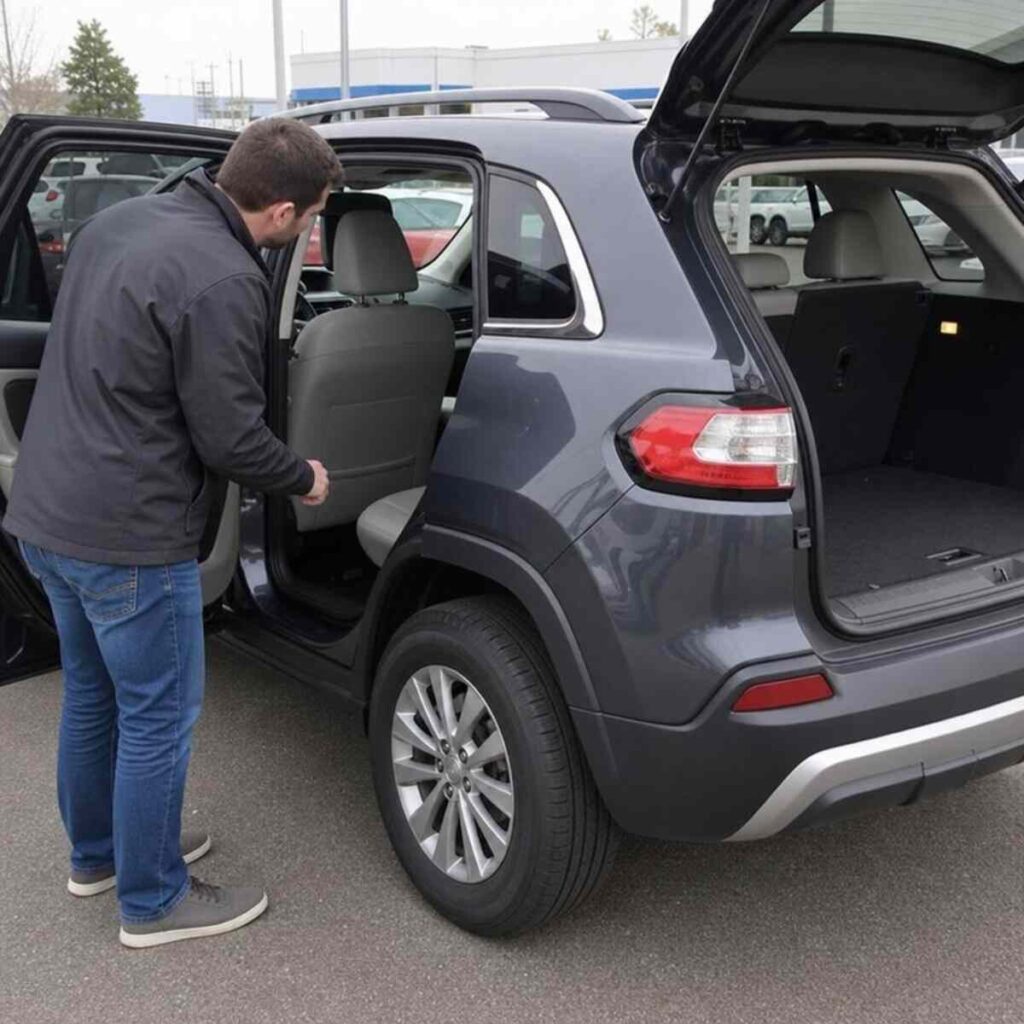
Gerane brings together car news, pricing coverage, and vehicle specifications to help readers follow new developments and research their next purchase. Its coverage spans everyday cars, SUVs, pickups, electric vehicles, and wider automotive business stories. Start with the news, then use a clear comparison process to work out what each update means for your needs and budget. An exceptionally fantastic fact about Gerane | U.S. Car News, Prices & Specs.
You don’t need to understand every engine code or read every announcement. You need to know what changed, whether it matters to you, and what to check next. That’s the approach we’ll take here: less information overload, more useful questions, and a practical route from browsing to buying.
What can you find on Gerane?
Gerane is an automotive publication covering vehicle launches, prices, specifications, and industry developments. Readers can browse stories about individual models, explore different vehicle categories, and use the site’s keyword search to find relevant coverage. Its homepage includes both product news and automotive business reporting, giving shoppers and enthusiasts different ways to follow the market.
The most useful starting point depends on what you’re trying to do. If you’re simply interested in cars, browse broadly and follow the subjects that catch your attention. If you’re replacing a vehicle, approach each article with a specific decision in mind.
Try separating your reading into three groups:
- News to understand: Announcements that explain what manufacturers are introducing or changing.
- Details to compare: Prices, equipment, dimensions, and specifications relevant to your shortlist.
- Questions to investigate: Anything the article leaves unresolved, such as local availability or the equipment fitted to a particular vehicle.
This is a suggested reading method, not a claim that every story answers every buying question. Keep a short note beside each article: “Useful because…” If you can’t finish that sentence, save the story for general interest rather than treating it as purchase research.
Gerane’s latest car news coverage can be your starting point. Before committing, check vehicle-specific information against the manufacturer’s documentation, the seller’s written quote, and any relevant official records.
For example, an article about a new SUV might introduce a promising option. Your next task is narrower: establish which version has the seating, equipment, and price you actually need. That turns an interesting headline into a manageable research task.
Read the latest car news with a clear purpose
Start every news story with one question: “What decision could this change for me?” This keeps your attention on useful details rather than the announcement’s excitement.
You might be deciding whether to wait for a replacement model, compare a different powertrain, or investigate a lower equipment level. Write that decision down before collecting more information. Then read for the facts needed to make it.
Separate announcements from purchase-ready information
Use a simple reading checklist rather than assuming every new vehicle story describes something you can buy immediately:
- Vehicle status: Does the article describe a concept, a production model, or a vehicle already reaching sellers?
- Market: Is the information intended for the United States or another country?
- Timing: Does it distinguish the reveal date, ordering date, and expected arrival date?
- Pricing: Is a price confirmed, estimated, or still unannounced?
- Equipment: Are the highlighted features standard, optional, or limited to one version?
Treat unanswered items as open questions. Don’t fill them in with guesses, even when the rest of the article sounds confident.
A helpful note might read: “Interested in this model, but U.S. availability and delivered pricing still need checking.” That’s much more useful than writing “Buy this one” after seeing an attractive photograph.
Turn specifications into practical questions
When a number catches your attention, connect it to something you do. Instead of stopping at a cargo figure, ask whether your stroller, work cases, or mobility equipment will fit. Instead of choosing a model by its power output, plan to assess whether its response feels comfortable during an ordinary drive.
Try this small exercise after reading a launch story:
- Write down the three changes you noticed.
- Put a real-life use beside each change.
- Cross out anything that doesn’t affect your needs.
- Add a verification task beside anything still uncertain.
Suppose an announcement emphasizes a larger screen, revised seats, and a different engine. Your notes might prioritize seat comfort, leave engine suitability for a test drive, and mark the screen as a preference rather than a requirement.
You’re not dismissing technology. You’re deciding how much attention it deserves in your own purchase.
Use car industry news as context, not a buying deadline
Gerane also publishes automotive business coverage alongside model stories. That gives readers a place to follow broader developments without limiting their reading to individual vehicle launches.
When reading car industry news, separate what a story establishes from what you’re tempted to conclude. An announcement about a manufacturer’s plans is not, by itself, a written offer on the car outside your local dealership. Keep those two levels of information separate in your notes.
Use three columns:
| News item | Question it raises | Evidence needed before acting |
|---|---|---|
| A model update is announced | Does the outgoing version still meet my needs? | Equipment comparison and actual quotes |
| A manufacturer discusses future production | Is my preferred vehicle available locally? | Confirmation of a specific vehicle |
| A new powertrain is introduced | Would it suit my driving routine? | Specifications, running-cost research, and a test drive |
| A brand changes its product range | Should I revise my shortlist? | Details about the models I’m considering |
The table is a thinking tool, not a forecast. Its purpose is to prevent a broad headline from becoming an unsupported personal conclusion.
Before changing your purchase date, write a short explanation: “I’m waiting because I need this confirmed feature,” or “I’m proceeding because the available vehicle meets my requirements.” Avoid making “Everyone says the market is changing” your only reason.
You can enjoy industry reporting without turning every development into an urgent shopping instruction. Keep interesting stories in one folder and decision-critical information in another. That small distinction makes your research easier to revisit when it’s time to choose.
How should you read car prices?
Read car prices by identifying what each figure includes, which vehicle it applies to, and what conditions are attached. For a real purchase comparison, ask sellers for written out-the-door prices rather than relying on an advertisement or a monthly payment alone. The Federal Trade Commission recommends getting that price before visiting the dealership.
A useful price note should name the vehicle, describe the equipment, record the date, and explain any conditions. If one of those pieces is missing, put a question mark beside the number. Don’t treat it as directly comparable with a complete quote.
Keep the different figures separate
The FTC distinguishes several pricing terms used during vehicle sales. Rather than treating every advertised or quoted number as interchangeable, identify whether you’re looking at a manufacturer’s suggested price, a negotiated selling price, or the total transaction amount.
Organize your comparison sheet around these questions:
- What is the vehicle’s selling price?
- Which factory options or packages are included?
- How is the destination or delivery charge shown?
- What taxes, registration charges, and other fees appear?
- Are optional products included?
- Does a discount depend on qualifications or financing conditions?
- What is the final out-the-door total?
Ask the seller to explain each line you don’t understand. The FTC specifically warns shoppers to examine advertised promotions and obtain written pricing so they can compare offers and identify unwanted charges.
For your own records, keep the original quote rather than copying only its final number. If the quote changes, save the revision separately. You’ll then have a clear account of what changed and what still needs explanation.
Compare the same vehicle configuration
Build your comparison around a precise description. Write the model year, trim, powertrain, drivetrain, and required equipment at the top of the page. Ask each seller to confirm how closely its vehicle matches that description.
If the vehicles differ, don’t hide the difference inside the price comparison. Add a separate note explaining whether the extra equipment matters to you. You might prefer one configuration, but that preference should be visible, not accidental.
Here’s a useful request to adapt:
Please send a written, itemized out-the-door quote for this vehicle, including its identifying details, installed options, taxes, fees, and any conditions attached to discounts. Please show optional products separately.
This wording follows the FTC’s emphasis on written total pricing and careful review of add-ons. It isn’t a guarantee of a particular offer; it’s a way to ask a clearer question.
Before comparing totals, check that both quotes answer the same question. If one includes products you didn’t request, ask for clarification before deciding which offer better suits you.
Build a budget around ownership, not just purchase
The purchase price is only one part of the financial picture. The Consumer Financial Protection Bureau advises considering interest, insurance, routine maintenance, registration, fuel, and repairs when assessing vehicle affordability. Start with those categories rather than treating the payment as your entire transport budget.
Create a worksheet with three groups: money needed at purchase, recurring expenses, and a reserve for less predictable costs. Enter confirmed figures where you have them. Label everything else as an estimate so you don’t mistake a rough planning number for a quote.
For each shortlisted vehicle, gather:
- A written purchase quote.
- A financing offer, if needed.
- An insurance quote for the version you’re considering.
- A fuel or charging estimate based on your driving.
- Maintenance information and a plan for repair expenses.
The Department of Energy’s Vehicle Cost Calculator can help compare ownership scenarios using information about your driving habits. Treat its output as an estimate to review, not a promise of your future expenses.
Compare financing on consistent terms
When reviewing loan offers, compare the amount financed, annual percentage rate, interest rate, loan length, and monthly payment. A longer term can reduce the payment while increasing the interest paid over the loan’s life, so the payment alone doesn’t show the full cost.
Put competing offers side by side using the same fields. If the amount borrowed or repayment period differs, flag that before comparing payments. The CFPB’s auto-loan guide also encourages examining total loan cost rather than focusing only on the vehicle price or monthly bill.
For a final check, write two sentences: “This vehicle requires this much upfront,” and “This is my expected ongoing cost.” Then list the estimates that still need confirmation.
You don’t need a complicated spreadsheet. You need a budget you can explain without skipping the less exciting expenses.
Use buying guides to create a focused shortlist
Approach a buying guide with a description of your life, not just a favorite badge. Before browsing recommendations, write down who travels with you, what you carry, where you park, and which tasks your current vehicle struggles with.
Keep the description concrete. “I need a practical vehicle” leaves a lot open. “I need rear-seat access for two child seats and room for a folded stroller” gives you something to investigate.
Divide requirements into three groups
Use the following structure when you read buying advice:
- Must-have: A requirement you won’t compromise on, such as a particular seating arrangement or access need.
- Strong preference: Something you value but could trade for a better overall fit.
- Optional: Equipment or styling you enjoy but don’t need to complete your regular journeys.
Write a reason beside each must-have. If you can’t explain why it belongs there, consider moving it to another group. This isn’t about stripping the enjoyment out of buying a car; it’s about knowing which choices are deliberate.
Next, choose a small shortlist you can investigate properly. Give every candidate the same tasks: equipment verification, cost research, and an in-person assessment. Don’t allow your favorite to skip checks you require from the others.
Match research tasks to your situation
For family use, put access, seating arrangements, and your everyday cargo on the inspection list. For urban use, plan to check visibility, maneuvering, and fit in your usual parking space. For work use, bring a clear description of the equipment and journeys the vehicle must handle.
If towing is required, ask for documentation specific to the exact vehicle and your intended use. Leave the requirement unresolved until you have the relevant information; don’t substitute an attractive headline figure for that check.
A simple shortlist worksheet might include:
| Requirement | Evidence to collect | Your decision |
|---|---|---|
| Comfortable seating | Sit in each regularly used position | Accept, reject, or revisit |
| Cargo suitability | Bring representative items or measurements | Fits or needs another check |
| Required equipment | Confirm it on the specific vehicle | Present or absent |
| Affordable ownership | Complete the same budget worksheet | Within or outside your plan |
The goal isn’t to produce a perfect score. It’s to make your reasons clear enough that you can explain why one candidate stays and another leaves.
Which powertrain fits your driving routine?
The right powertrain is the one that fits your journeys, refueling or charging arrangements, and total budget. Conventional hybrids use gasoline and recover energy during braking; plug-in hybrids can use gasoline and externally supplied electricity; all-electric vehicles run on electricity and require charging. Start by understanding those differences before comparing individual models.
You don’t have to decide which technology is best for everyone. Describe an ordinary week, then investigate how each option would work within it.
Gasoline vehicles and conventional hybrids
For a gasoline vehicle, collect the fuel-economy information for the exact version under consideration. For a conventional hybrid, remember that plugging in isn’t part of its normal operation. FuelEconomy.gov provides information about hybrid operation and tools for researching vehicle efficiency.
Write down your typical weekly distance and the mix of journeys you make. Then use consistent assumptions when comparing fuel costs. Avoid giving one candidate your most optimistic driving scenario while judging another against a difficult week.
FuelEconomy.gov’s comparison and savings tools let shoppers investigate vehicles and personalize relevant assumptions, including mileage and fuel prices. Use those tools to build a comparison you can revisit when your shortlist changes.
Keep the result beside the purchase quote. That way, your choice reflects both the cost of buying the vehicle and your estimated cost of using it.
Plug-in hybrids
A plug-in hybrid combines external charging with gasoline-powered operation. Its fuel-cost outcome depends on factors including how much driving happens on electricity, energy prices, the vehicle itself, and how long it is owned. Buying one doesn’t automatically guarantee that fuel savings will offset a higher purchase price.
Before adding one to your shortlist, answer these questions:
- Where would I normally charge?
- How often would I realistically plug in?
- Which regular journeys would use electricity?
- What information do I need about gasoline operation?
- Have I compared costs using my own expected charging pattern?
Don’t write the answer you wish were true. If charging would be inconvenient, record that plainly and investigate the consequences before proceeding.
All-electric vehicles
For an electric vehicle, begin with a charging plan rather than a range headline. The Department of Energy describes home charging options and notes that multifamily housing can require different arrangements. Electrical installation questions should be addressed with an appropriately qualified contractor and suitable equipment.
Map the places where you expect to charge during an ordinary week. If you rent, include a conversation with the property manager or landlord in your research plan. If you rely on shared or public charging, check the actual locations you intend to use rather than assuming access.
Also write down your less frequent journeys. Ask what charging stops you would plan, which equipment the vehicle can use, and how you would handle a charger being unavailable. Treat those as questions to resolve before purchase.
The practical aim is simple: choose a vehicle you can support with a routine you’re willing to follow, not one that depends on an ideal week you rarely have.
Compare new and used vehicles with different checks
Use the same needs list for new and used vehicles, but don’t use the same evidence checklist. With a used vehicle, investigate the individual car’s condition and history rather than relying on the model’s general description. The FTC recommends reviewing vehicle history, checking recalls, and arranging an independent mechanical inspection.
Keep your comparison fair by asking what each candidate offers at its actual quoted price. Don’t give a new vehicle credit for equipment it doesn’t have, or a used vehicle credit for a warranty you haven’t read.
Check the individual used vehicle
A history report is not a substitute for an independent inspection. The FTC notes that reports typically won’t identify mechanical problems and recommends an inspection even when a vehicle has been certified by a dealer. Ask for a written report and an estimate of necessary repairs.
Create a folder for the specific vehicle rather than mixing its records with general model research. Include the identifying details, seller correspondence, available service records, inspection findings, and questions you still need answered.
When reviewing documents, use three labels:
- Confirmed: Supported by documentation you’ve checked.
- Needs explanation: Information that is unclear or inconsistent.
- Not established: A claim for which you haven’t received evidence.
These labels help you avoid turning “the seller mentioned it” into “I verified it.”
Read coverage before assigning value to it
For a used vehicle from a dealer, review the Buyers Guide to understand whether it is offered with warranty coverage or sold as is. Read the relevant written terms rather than relying on a general description such as “protected” or “covered.”
Ask which document governs the coverage being discussed. Then note what you need clarified before deciding how much that coverage matters to you.
If an inspection identifies concerns, pause and review them with the inspector. You don’t need to turn every finding into a negotiation tactic. First decide whether you’re comfortable considering that vehicle at all.
Make safety research specific to the vehicle
Check safety information for the model year and version you’re researching. NHTSA’s ratings explain crash-test results and their comparison limits; for example, frontal and overall scores should only be compared within the agency’s specified class and weight criteria. Don’t treat every star rating as interchangeable across every vehicle type.
Give safety research its own space in your worksheet rather than burying it inside a long equipment list. Record what you checked, which vehicle it applied to, and any point you still need explained.
Review features and instructions together
Ask for a demonstration of the safety and assistance features fitted to the exact vehicle. Have the seller identify the corresponding sections of the owner’s manual. Your goal is to understand what each system does, when it operates, and what responsibilities remain with you.
Use these prompts during the explanation:
- How do I tell whether this feature is active?
- What warnings should I recognize?
- Where are its operating limits explained?
- How do I adjust settings without guessing?
- Is this equipment actually fitted to this vehicle?
Don’t ask for a risky demonstration or attempt to test emergency features yourself. Focus on understanding the documented operation and controls.
Check recalls by vehicle identification number
NHTSA’s VIN lookup can identify unrepaired safety recalls for a specific vehicle. Its search has limitations: recently announced recalls may not yet include every affected VIN, and the tool does not display every category of historical or non-safety campaign. Read the search guidance alongside the result.
Save the result with the date you checked it. If something appears, ask for the relevant manufacturer guidance and documentation of any completed work. For a vehicle you already own, consider NHTSA’s recall alerts so that safety research doesn’t stop after purchase.
Plan a test drive around everyday tasks
Use the test drive to answer questions you prepared in advance. Instead of trying to remember every impression afterward, bring a short checklist and use the same one for each candidate.
Start while the vehicle is parked. Adjust the seat, steering wheel, and mirrors. Check whether you can comfortably reach frequently used controls, then ask about anything unfamiliar before setting off.
Check comfort, access, and controls
Try the seating positions that matter to your household. Practice getting in and out, loading representative items, and arranging the space as you normally would. Ask permission before fitting accessories or moving substantial equipment.
For the front seat, record your own observations rather than trying to sound like a reviewer:
- Can I find a comfortable driving position?
- Are the displays easy for me to read?
- Can I operate the main controls without confusion?
- Does entry or exit require an awkward movement?
- Is there anything I need to try again?
Keep preferences separate from problems. “I prefer physical climate controls” describes your preference. “I couldn’t find the demister control” identifies a task that needs another look.
Use a suitable route and record your impressions
Ask whether the agreed route can include the kinds of roads you regularly use. Follow traffic rules and the seller’s conditions, and keep your attention on driving. Have a passenger record notes if appropriate, or wait until you’re safely parked.
Afterward, write down what you noticed about comfort, visibility, noise, and ease of use. Avoid turning a brief drive into a confident prediction about long-term reliability or ownership cost. Those questions need different evidence.
Finish with three notes: your strongest positive impression, your main concern, and what you still need to verify. If two cars remain close, revisit the unresolved task rather than relying on which visit felt more exciting.
For a used vehicle, keep this personal assessment separate from the independent mechanical inspection recommended by the FTC. They serve different purposes.
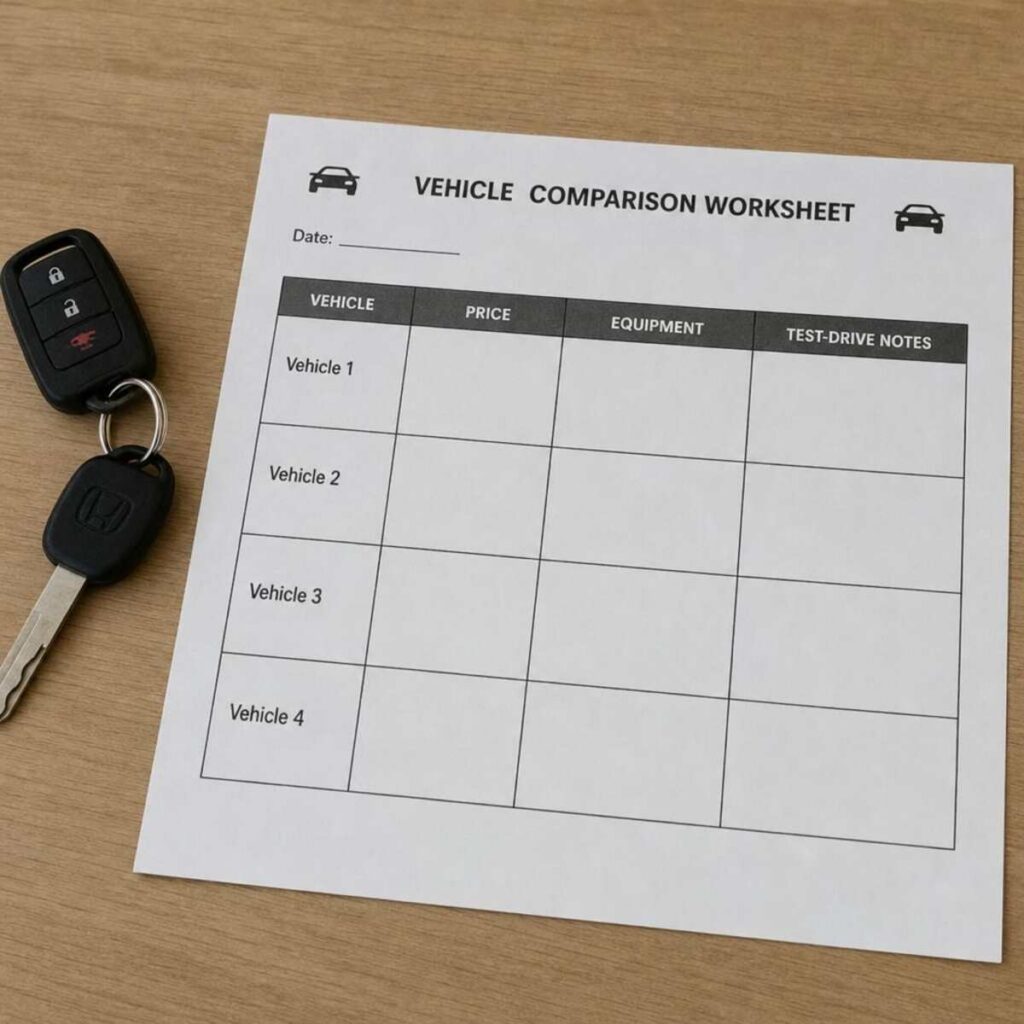
Keep your research organized and current
Give every shortlisted vehicle one page or digital note. Put your requirements at the top, confirmed information in the middle, and unresolved questions at the bottom. Save the article or document behind each important detail so you can check it again.
A simple research record can look like this:
| Item | What to record |
|---|---|
| Vehicle identity | Model year, version, equipment, and specific vehicle details |
| News reference | Article topic, publication date, and the question it raised |
| Pricing | Written quote, date received, and stated conditions |
| Running costs | Assumptions used and estimates still awaiting confirmation |
| In-person checks | What you tried and what you observed |
| Open questions | Missing evidence and the next person to ask |
Use “not checked” freely. It is a useful status, not a failure. An honest gap is easier to investigate than an assumption hidden inside a confident-looking spreadsheet.
Set a manageable reading routine
To stay updated with Gerane, choose a routine that matches your stage of research. During general browsing, save only stories that explain something you care about. Once you have a shortlist, read with those vehicles and unresolved questions in mind.
For a weekly review, try this sequence:
- Browse recent coverage relevant to your interests.
- Save only the stories connected to a real question.
- Add any useful information to the relevant vehicle note.
- Identify which details require a primary document or seller confirmation.
- Choose one practical research task to complete next.
As the purchase approaches, spend less time expanding the reading list and more time closing important gaps. You might need another equipment check, an updated quote, or a second look at access and seating.
Keep a separate “interesting later” folder for unrelated stories. You can still enjoy the latest car news without letting every new announcement restart your shortlist.
Finally, review dates before relying on saved information. Write “recheck before purchase” beside any price, offer, availability statement, or detail you haven’t confirmed for the vehicle you intend to buy.
Complete a final review before committing
Before signing, compare the paperwork with the offer and vehicle you researched. The FTC recommends written pricing and careful attention to optional add-ons, while the CFPB advises reviewing the full borrowing picture rather than only the monthly payment. Use those principles for a calm final check.
Work through this list at your own pace:
- Vehicle: Confirm that the identifying details and equipment match your choice.
- Price: Compare the itemized total with the written quote you accepted.
- Optional products: Ask about anything you didn’t request or don’t understand.
- Financing: Check the amount financed, rate, term, payment, and total cost.
- Used-car evidence: Review the inspection findings and relevant written coverage.
- Outstanding questions: Resolve important gaps instead of assuming they’ll be handled later.
- Records: Keep copies of the documents and commitments that matter to the transaction.
If something differs from your understanding, ask for an explanation before proceeding. Use a specific question: “What changed between this quote and this document?” You don’t need confrontational language to request a clear answer.
It may also help to write a final decision note: “I chose this vehicle because…” Include the needs it meets, the compromises you accepted, and the costs you reviewed. That keeps your reasoning grounded in your own research rather than the pressure or excitement of the moment.
Turn updates into a more informed choice
Use Gerane as a starting point for exploring cars, then give each interesting story a practical next step. Read the announcement, identify what matters, and check the details that affect your decision.
You don’t have to become an automotive expert. Build a clear shortlist, compare total costs, inspect the specific vehicle, and leave yourself room to ask questions. Staying informed is useful when it helps you choose with a clearer understanding—not when it simply gives you more headlines to remember.